Showing posts with label Red Cross. Show all posts
Showing posts with label Red Cross. Show all posts
Wednesday, September 22, 2010
Why I am a Red Cross Volunteer
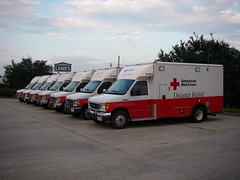
At my University there has been a Red Cross Club for a few years. And our local American Red Cross chapter finally discovered them. So I was there today at their second meeting of the year to talk about the Red Cross and the VA and volunteering off campus. I spoke about the things we do as emergency services volunteers, responding to fires, floods, hurricanes, storms, and so forth. Of Health & Safety, teaching classes. Of Service to the Armed Forces, of having others in my unit who were deployed who got the calls that they should come home while there was time. I suppose that this audience probably were more interested in this talk then my students in class are.
I started volunteering for the Red Cross when I was in college. I was a volunteer EMT, and since I was learning CPR, I also became an instructor. Our EMS organization taught classes on campus to university staff and to students (it was how the organization raised funds). And I taught classes in the community as an instructor for the Red Cross chapter.
I left that behind when I graduated and started work. Work and grad school just squeezed that out of my life for a while. Then when I went back to grad school for a PhD I started volunteering again, this time in emergency services. My degree was in modeling operations. The Red Cross gave me the opportunity to take part in operations.
It is not just that the Red Cross conducts operations. It conducts them under some of the most difficult constraints for operations. In disaster response, we do not choose the time, place or scale, and we do not get to choose who responds. Those who plan and run the operation work with the resources and personnel available at the time and place. The current classical situation is a hurricane. And to work in that setting competently, with the chaos of an unknown and uncertain situation where the pressure of people whose lives are at stake is a stress and challenge only matched by combat against a willful and capable opponent.
What to tell these college undergraduates that perhaps volunteering with the Red Cross or with Veterans Affairs is worthy of their time? I had three areas for them.
1. This was good and meaningful tasks. Granted, there were other opportunities for good and meaningful things that they will be provided on a college campus. With the Red Cross and VA staff and volunteers where people who have done things. At both, everyone there has had the experience of being in high stress situations and having to act and make decisions. Whether it is a Red Cross volunteer who is the team lead at a house fire where the family has no where to go, no food and only the clothes on their back, or the nurse who has had a patient crash, they would be with people who have experienced life and can get things done.
2. The Red Cross and the VA trains their volunteers. For those who volunteer over years, they will be trained to do their tasks, but also about dealing with people and dealing with life in all its aspects, both the good and bad. To recognize what is important and what is not.
3. I also told them that I was a professor. And that this semester, there is a group in my department whose senior design project is with the local Red Cross Chapter. Because the Red Cross and the VA are not just another charity or hospital, but they are organizations that reach out into their communities and interact with them in complex ways. And because of this someone with a little curiosity will quickly see there are many questions to be asked, ways of handling difficult issues to develop, and resource limitations that need to be dealt with. So I told them that I would like to see members of this club who volunteer with the Red Cross and the VA over the course of their college years to be doing senior projects, senior thesis and class papers based what they observed and did with the Red Cross and VA. So they can take what they are learning and put it in context with real problems effecting real people.
This fall, the first Pitt students have started volunteering at the VA under the Red Cross Veterans Affairs Voluntary Services partnership, after going through orientations in spring. This year, they are being introduced to the Red Cross and VA at the beginning of the year before they have settled into their routines. And these students will see a part of life greater then what they would get if they did not leave their campus.

Sunday, February 21, 2010
PSO: A world of water
[Note: Originally posted at Pittsburgh Symphony Orchestra: Outside Perspectives]
We've had a long couple of weeks here in southwestern Pennsylvania. With a historic snowstorm wrecking havoc on our region everything has been been affected, including the symphony. After a week of snow storms, it was good to return to the symphony.

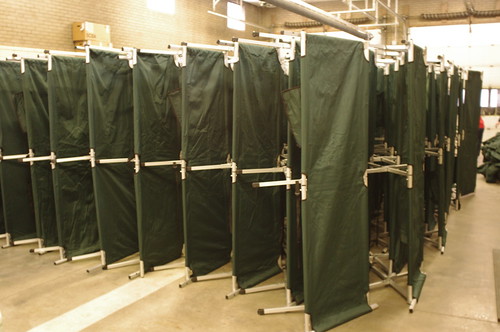
We've had a long couple of weeks here in southwestern Pennsylvania. With a historic snowstorm wrecking havoc on our region everything has been been affected, including the symphony. After a week of snow storms, it was good to return to the symphony.
Tonight was a night of new music. And the composer Mason Bates was here to introduce his piece. He spoke of the various movements of the piece, and described that transitions of the states of water. He reminded us that "glaciers ultimately melt." Then followed by hurricanes and floods, reminiscent of the trials experienced by the city of New Orleans.
In the audience were a number of staff and volunteers of the Red Cross. Over the past two weeks they and their community partners have been hard at work, providing shelter, warmth, comfort and food to many who have been effected by these storms and the power outages that have caused so much trouble to so many.Earlier today we had been cleaning and repacking our supplies, so many of which were used over the past two weeks. And we also remember that glaciers ultimately melt. As does snow and ice. And as in Liquid Interface following the glaciers melting comes the hurricanes and floods, we are worried about what comes when the snow covering our region melts. But we will be ready.
Thursday, April 09, 2009
City gives final salute to slain officers

Joined by a dark blue sea of officers from around the region and around the country, Pittsburgh gave its final salute this afternoon to three policemen killed in the line of duty Saturday.
Today Pittsburgh said farewell to three of its own. On Saturday morning, three police officers were killed in ambush when responding to a domestic disturbance call. They lay in state from Thursday morning to Friday morning in the City-County building. Friday, was the memorial service. Some 30,000 police from around the country and Canada came to provide escort. Because, as one of them said, 'that is what we do'
Pittsburgh is like many other big cities in the east. Stable communities whose populations have made a stake in their city. Including affirming those of their own who take on the badge and pledge to serve and protect.
And so, along with many others, yesterday I was at the viewing along with other Red Crossers. Like alot of other funerals, this is not about the dead, but about the living. And their connections and relationships. So, in addition to the viewing of the body, there was the meeting and greeting of those who have come. And recognition of those joined by common bonds of relationships, of shared service, and a city we serve. Along with the formalities, I was introduced to one of the police commissioners (?). A former board member of the Red Cross. Because we are two people sharing our duty to serve our city.
Sunday, September 28, 2008
PSO: Something constant in something changing
First concert of the season. Actually, I think I've only been to opening weekend once, two years ago. But I remember the start. The assembled audience openly singing 'The Star Spangled Banner' to the best of their ability accompanied by the Pittsburgh Symphony Orchestra. A performance I find better then any celebrity with their own interpretation of the piece at a Super Bowl or World Series.
The Star Spangled Banner has changed its meaning to me over the past two works, which is proper as an artistic work (which it is, among other things). In the past two years, I have been attached to military forces to Afghanistan, and I have responded to fires and worked in Hurricane response as a Red Cross volunteer. I've been alongside those in the military, fire, police, all levels of public service and volunteers doing their jobs in non-standard conditions. To use some allusions to literature, classic man vs. man and man vs. nature scenarios. Some of the people I worked with were tuned personally to working in crisis and emergency conditions. Some were not. But even those who were not, generally strove to do their duty even when in situations much larger then themselves. And I was glad to be in their company.
With this frame of mind, I listened to the PSO play 'Short Ride in a Fast Machine.' I've listened to versions on the internet, but somehow, the hearing it live, in the concert environment, with all the variables of the concert setting such as an audience, the orchestra and conductor, and its place on the program, changes its meaning. I spent much of the past month in Texas and Louisiana volunteering for the Red Cross, serving in government operations centers. In these centers, there were representatives from a wide variety of state government agencies, working to provide support for citizens being impacted by the hurricane or in the early stages of recovery. Many of the workers there were used to working in emergencies, like those from law enforcement or fire. Many were not, and these were new stresses for them.
The time in these centers were marked by constant activity, rising and falling in tempo. And there was much repetition, as similar issues would recur in different places. Similar enough to be familiar, but just different enough that they had to be engaged differently. Very much like the orchestral parts in 'Short Ride' with it many repetitions in the parts that were close enough to be familiar, but different enough to sound different with every reprise of a theme.
The underlying unity of 'Short Ride in a Fast Machine' is provided by the wood blocks, with their constant marking of a pulse, even as their tenor changes. And the constant where I was working was in the steadiness of the work, the ongoing response to situations by those doing the work, whether steady, calm, frustrated, or overwhelmed, which was the constant tenor amidst the constant activity and sometimes chaos of a hurricane.
My life is a varied one, with many aspects. Among them is this place to absorb and respond to performances of the fine arts. While in Texas and Louisiana I dealt with a wide variety of people. People whose lives have been turned inside out and upside down. People who worked in recovery, to whom hurricane response and recovery was a challenge worthy of applying their talents and skills. People who were responsible for citizens of their towns, counties and parishes, doing their duty. People who heard a calling to help their fellow people, using the talents and abilities they may have. Some of them would view themselves as simple people, far away from the lights of the big city and the great ideas of the world. And many of them would be greatly surprised at being thought of in the context of one of the country's great fine arts institutions. But it is for them that such works were created. And I was proud to know them and glad for the opportunity to serve with them.
[Also posted at the Pittsburgh Symphony Orchestra PSO Blogs]
The Star Spangled Banner has changed its meaning to me over the past two works, which is proper as an artistic work (which it is, among other things). In the past two years, I have been attached to military forces to Afghanistan, and I have responded to fires and worked in Hurricane response as a Red Cross volunteer. I've been alongside those in the military, fire, police, all levels of public service and volunteers doing their jobs in non-standard conditions. To use some allusions to literature, classic man vs. man and man vs. nature scenarios. Some of the people I worked with were tuned personally to working in crisis and emergency conditions. Some were not. But even those who were not, generally strove to do their duty even when in situations much larger then themselves. And I was glad to be in their company.
With this frame of mind, I listened to the PSO play 'Short Ride in a Fast Machine.' I've listened to versions on the internet, but somehow, the hearing it live, in the concert environment, with all the variables of the concert setting such as an audience, the orchestra and conductor, and its place on the program, changes its meaning. I spent much of the past month in Texas and Louisiana volunteering for the Red Cross, serving in government operations centers. In these centers, there were representatives from a wide variety of state government agencies, working to provide support for citizens being impacted by the hurricane or in the early stages of recovery. Many of the workers there were used to working in emergencies, like those from law enforcement or fire. Many were not, and these were new stresses for them.
The time in these centers were marked by constant activity, rising and falling in tempo. And there was much repetition, as similar issues would recur in different places. Similar enough to be familiar, but just different enough that they had to be engaged differently. Very much like the orchestral parts in 'Short Ride' with it many repetitions in the parts that were close enough to be familiar, but different enough to sound different with every reprise of a theme.
The underlying unity of 'Short Ride in a Fast Machine' is provided by the wood blocks, with their constant marking of a pulse, even as their tenor changes. And the constant where I was working was in the steadiness of the work, the ongoing response to situations by those doing the work, whether steady, calm, frustrated, or overwhelmed, which was the constant tenor amidst the constant activity and sometimes chaos of a hurricane.
My life is a varied one, with many aspects. Among them is this place to absorb and respond to performances of the fine arts. While in Texas and Louisiana I dealt with a wide variety of people. People whose lives have been turned inside out and upside down. People who worked in recovery, to whom hurricane response and recovery was a challenge worthy of applying their talents and skills. People who were responsible for citizens of their towns, counties and parishes, doing their duty. People who heard a calling to help their fellow people, using the talents and abilities they may have. Some of them would view themselves as simple people, far away from the lights of the big city and the great ideas of the world. And many of them would be greatly surprised at being thought of in the context of one of the country's great fine arts institutions. But it is for them that such works were created. And I was proud to know them and glad for the opportunity to serve with them.
[Also posted at the Pittsburgh Symphony Orchestra PSO Blogs]
Wednesday, September 17, 2008
Word of the day: Doves
Doves: Disaster Operations Volunteer Escapees. retired couple that for their vacations travel to disasters in their RVs to work as Red Cross volunteers.
Tuesday, September 16, 2008
QOTD: If you are not pissing everybody off
"If you are not pissing everybody off, you aren't going to make it as a government liaison."
Friday, September 12, 2008
Hunkering down for Hurricane Ike
I've been here for a week now. Mostly working in the Louisiana State Operations Center. Very busy, lots of phones going off with all the state agencies here. Lots of different groups in the room. Numerous state agencies including State Police, Environmental Quality, National Weather service, Dept. of Agriculture, Department of Transporation and Development. Department of Social Services, Department of Health and Hospitals. Voluntary Organizations Active in Disaster. Red Cross. Corps of Engineers. And many that you may not expect. All with a job. Some jobs are obvious, some are not. Because there is a disaster. It is a surprise that everyone can be thrown in a room and work together. Well, ok, there is a learning curve for everyone to work together, but still, 50+ people in a room who have never been in the same room before working together is pretty impressive.
At one point one of the other Red Cross guys with me took a moment to step back to watch the room. He figured there were thirty phones going off at the time. Let's see, what kind of things to I work on. . .
- Calls from mobile kitchens that are running out of fuel
- Shelters that needed supplies, showers, generators
- Requests for data on feeding activities for planners
- Requests for information on state emergency and disaster declarations
State agencies asking 'Can Red Cross do . . .?'
Governor's representatives coming to ask 'How does Red Cross . . .?'
- Big, unsolicited, unexpected donation of food that we had to figure out how to use (or if we could use it)
Lots of big issues. Very different from being one of the people on the ground, talking to people, feeding people, setting up cots, surveying damage, all the other things I've done in Red Cross. But it is not too hard to see how it fits into everything else. Especially when some of the resources that get coordinated here keep other operations from shutting down. Like feeding people who do not have another source of food because the power is out.
But now, Ike is making landfall overnight. Everyone is hunkering down. The place I'm staying has had its power on and off today. And waiting out the storm. So we can go back to work tomorrow.
At one point one of the other Red Cross guys with me took a moment to step back to watch the room. He figured there were thirty phones going off at the time. Let's see, what kind of things to I work on. . .
- Calls from mobile kitchens that are running out of fuel
- Shelters that needed supplies, showers, generators
- Requests for data on feeding activities for planners
- Requests for information on state emergency and disaster declarations
State agencies asking 'Can Red Cross do . . .?'
Governor's representatives coming to ask 'How does Red Cross . . .?'
- Big, unsolicited, unexpected donation of food that we had to figure out how to use (or if we could use it)
Lots of big issues. Very different from being one of the people on the ground, talking to people, feeding people, setting up cots, surveying damage, all the other things I've done in Red Cross. But it is not too hard to see how it fits into everything else. Especially when some of the resources that get coordinated here keep other operations from shutting down. Like feeding people who do not have another source of food because the power is out.
But now, Ike is making landfall overnight. Everyone is hunkering down. The place I'm staying has had its power on and off today. And waiting out the storm. So we can go back to work tomorrow.
Saturday, September 06, 2008
Greeting Hurricane Gustav in Texas
Last week Wednesday
"Please update your availability to deploy for Hurricane Gustav"
Thursday:
"Can you deploy for Hurricane Gustav? I'll get back to you with an assignment."
Friday 1430:
"Book the first available flight to Tyler, TX. You will be a government liaison. Call me when you have flight information."
I've been spending the past week in Tyler, TX volunteering for the Red Cross responding to Hurricane Gustav. It has been a hectic week, almost all of it spent inside a state operations center here starting from morning until late at night. I joke it is my first Red Cross deployment, it is for a hurricane, and I never got wet.
Tyler, TX is in northeast Texas, and while it did not get hit by Hurricane Gustav, its partner city, Beaumont, did. And in the first test of the Texas evacuation plan, all evacuees from Beaumont were sent to Tyler. The center I was in was responsible for state of Texas resources in 20 counties in northeast Texas, who were housing evacuees from various parts of the Texas coast around Beaumont and Galveston. It is a massive burden, as the receiving counties are not nearly as densely populated as their coastal partners. Red Cross and locally sponsored shelters had 5000+ evacuees, and every hotel and motel room in the region was booked, mostly with evacuees. And they have to be fed, medical needs met, and issues of all sorts that happen when you have this large a population over any period of time. And then, when the all clear comes, everyone that evacuated with help from the state, needs to get back.
Does it work? Like all concepts that are implemented for the first time there are kinks, but everyone here looks pleased by the end result, and much better then last time around (2005). Evacuees were around people from the same place as them, and it was easier to organize the transporation back, as people in one shelter were going to the same destination point along the coast. Still, I submitted a 5 page report with some issues, and everyone has been told to do the same, quickly, because there is another hurricane on the way.
It was a good place to work. Incident Command System (ICS) works, I had my role, and I fit into the team here pretty much seamlessly. Like all operations, there is a lot that is learned everytime you go on one in a different place. It gets hectic. Problems arise at the local level that were not anticipated (after all, this is a disaster). There are the information requests from higher up that are overly burdensome. And there are long hours trying to plan the next stage of the disaster response, which has to happen the same time you are working on issues in the here and now. And you have been doing this for N hours that day, with another M hours to go before you even think of sleep. Along with everyone else in the room who have been doing the same thing.
Deep thinking will have to wait. The last couple days were spent getting buses to people, people on buses, and buses moving south. And people arriving back home. And now, I head east, to Louisiana, where it seems like it was not so easy. Because, even though I've noticed that Hurricane Gustav is not on the news anymore (pushed off by Hurricane Hannah. We heard a reporter say "it may make a moderate category 1" and we all started laughing. A moderate category 1 can be experienced by driving on the highway with the windows open during a thunderstorm), Red Cross, police, medical, and military personnel are still helping those evacuees, feeding those who have returned to homes without electricity and gas, and helping hospitals who have their populations back, but are not operating at full themselves.
"Please update your availability to deploy for Hurricane Gustav"
Thursday:
"Can you deploy for Hurricane Gustav? I'll get back to you with an assignment."
Friday 1430:
"Book the first available flight to Tyler, TX. You will be a government liaison. Call me when you have flight information."
I've been spending the past week in Tyler, TX volunteering for the Red Cross responding to Hurricane Gustav. It has been a hectic week, almost all of it spent inside a state operations center here starting from morning until late at night. I joke it is my first Red Cross deployment, it is for a hurricane, and I never got wet.
Tyler, TX is in northeast Texas, and while it did not get hit by Hurricane Gustav, its partner city, Beaumont, did. And in the first test of the Texas evacuation plan, all evacuees from Beaumont were sent to Tyler. The center I was in was responsible for state of Texas resources in 20 counties in northeast Texas, who were housing evacuees from various parts of the Texas coast around Beaumont and Galveston. It is a massive burden, as the receiving counties are not nearly as densely populated as their coastal partners. Red Cross and locally sponsored shelters had 5000+ evacuees, and every hotel and motel room in the region was booked, mostly with evacuees. And they have to be fed, medical needs met, and issues of all sorts that happen when you have this large a population over any period of time. And then, when the all clear comes, everyone that evacuated with help from the state, needs to get back.
Does it work? Like all concepts that are implemented for the first time there are kinks, but everyone here looks pleased by the end result, and much better then last time around (2005). Evacuees were around people from the same place as them, and it was easier to organize the transporation back, as people in one shelter were going to the same destination point along the coast. Still, I submitted a 5 page report with some issues, and everyone has been told to do the same, quickly, because there is another hurricane on the way.
It was a good place to work. Incident Command System (ICS) works, I had my role, and I fit into the team here pretty much seamlessly. Like all operations, there is a lot that is learned everytime you go on one in a different place. It gets hectic. Problems arise at the local level that were not anticipated (after all, this is a disaster). There are the information requests from higher up that are overly burdensome. And there are long hours trying to plan the next stage of the disaster response, which has to happen the same time you are working on issues in the here and now. And you have been doing this for N hours that day, with another M hours to go before you even think of sleep. Along with everyone else in the room who have been doing the same thing.
Deep thinking will have to wait. The last couple days were spent getting buses to people, people on buses, and buses moving south. And people arriving back home. And now, I head east, to Louisiana, where it seems like it was not so easy. Because, even though I've noticed that Hurricane Gustav is not on the news anymore (pushed off by Hurricane Hannah. We heard a reporter say "it may make a moderate category 1" and we all started laughing. A moderate category 1 can be experienced by driving on the highway with the windows open during a thunderstorm), Red Cross, police, medical, and military personnel are still helping those evacuees, feeding those who have returned to homes without electricity and gas, and helping hospitals who have their populations back, but are not operating at full themselves.
Saturday, November 17, 2007
Fire call as lead
*beep* *beep* *beep*
"Hello, this is ___ from the Red Cross. Did you page me?"
"One moment, lets see what I have for you. There is an electrical fire in A"
"I have a phone number for 911 at xxx-xxx-xxxx."
"Ok, thank you."
"Hello, this is ___ from the Red Cross, I got a message about a fire in A"
"Yes, there are N people. The address is xxx. How long before you can get there? . . . They will be at the xxxx waiting for you."
My first call as a team leader (in training). Had to call the team, a supervisor (since I'm only in training), and bring all the paperwork with me. One team member is very experienced (a lot like I am as a disaster action team member), the other was on her very first call.
Some parts of the call were easy. Like the borough was taking care of the clients before we arrived and provided a nice place for everyone to stay while we made arrangements. Some were difficult, like the fact that the child:adult ratio was rather high.
I've been doing this for a while now. There is a difference between being the proactive team member and being the leader who is actually responsible for everything. A lot more stress, and more things going through my head at one time. Some things went very well, and some things were just chaotic (and I have to learn how to organize my things better.) But all a part of my education. And it was very apprciated by client and fellow emergency workers (and fellow Red Crossers) alike. A good (if eventful) evening.
"Hello, this is ___ from the Red Cross. Did you page me?"
"One moment, lets see what I have for you. There is an electrical fire in A"
"I have a phone number for 911 at xxx-xxx-xxxx."
"Ok, thank you."
"Hello, this is ___ from the Red Cross, I got a message about a fire in A"
"Yes, there are N people. The address is xxx. How long before you can get there? . . . They will be at the xxxx waiting for you."
My first call as a team leader (in training). Had to call the team, a supervisor (since I'm only in training), and bring all the paperwork with me. One team member is very experienced (a lot like I am as a disaster action team member), the other was on her very first call.
Some parts of the call were easy. Like the borough was taking care of the clients before we arrived and provided a nice place for everyone to stay while we made arrangements. Some were difficult, like the fact that the child:adult ratio was rather high.
I've been doing this for a while now. There is a difference between being the proactive team member and being the leader who is actually responsible for everything. A lot more stress, and more things going through my head at one time. Some things went very well, and some things were just chaotic (and I have to learn how to organize my things better.) But all a part of my education. And it was very apprciated by client and fellow emergency workers (and fellow Red Crossers) alike. A good (if eventful) evening.
Friday, October 12, 2007
and at night you become a superhero - and other quotes
I spent the last weekend doing a lot of emergency service work, both as a ham radio operator at the Head of the Ohio and for a Red Cross exercise. Some quotes:
"Next time there is someone who is vitally important to the running of the whole show and she refuses a shadow, give her one anyway."
Me: "Hi. I'm your shadow. Your not allowed to get lost anymore."
Me: "You are going to sit down, under a tent, in the shadow, and I am going to watch you drink this bottle of water and eat a protein bar." (at 3PM, on a very hot day)
"I told them that they needed to turn around, and they started telling me how the river was free for everyone. Then I told them that is ok, and the Coast Guard will be coming by to talk to them. They said, 'The Coast Guard?!' Yes, the same U.S. Coast Guard that issues your licenses and put up the Notice To Mariners that is on your marina board saying that the river is closed today, and has been broadcasting messages on Marine Radio every half hour telling you that the river is closed. And they are coming to you."
Coast Guard: "Oh, we saw them. And we stopped to chat. And they were very agreeable."
Coast Guard: "I think we will go over there and say hi. And discourage anyone from heading in the river too fast."
Actress playing resident who was not quite all there and was trying to 'escape': "I want to go for a walk."
Me: "Oh fun, I want to go for a walk with you. Over here is a go outside for a walk place (pointing at a door that led to a courtyard, that was not out)"
Actress: "Oh, you're no fun. I can't even be mean to you."
Actress from a previous exercise: "Hi, remember me?"
Later in the day: "I'm hurt, you were avoiding me all day."
Disaster volunteer: "I work in marketing, it is so boring."
Me: "So then at night you put on your Red Cross shirt and become a superhero."
Volunteer: "I should show you what my phone says. 'Wonder Woman'"
"Next time there is someone who is vitally important to the running of the whole show and she refuses a shadow, give her one anyway."
Me: "Hi. I'm your shadow. Your not allowed to get lost anymore."
Me: "You are going to sit down, under a tent, in the shadow, and I am going to watch you drink this bottle of water and eat a protein bar." (at 3PM, on a very hot day)
"I told them that they needed to turn around, and they started telling me how the river was free for everyone. Then I told them that is ok, and the Coast Guard will be coming by to talk to them. They said, 'The Coast Guard?!' Yes, the same U.S. Coast Guard that issues your licenses and put up the Notice To Mariners that is on your marina board saying that the river is closed today, and has been broadcasting messages on Marine Radio every half hour telling you that the river is closed. And they are coming to you."
Coast Guard: "Oh, we saw them. And we stopped to chat. And they were very agreeable."
Coast Guard: "I think we will go over there and say hi. And discourage anyone from heading in the river too fast."
Actress playing resident who was not quite all there and was trying to 'escape': "I want to go for a walk."
Me: "Oh fun, I want to go for a walk with you. Over here is a go outside for a walk place (pointing at a door that led to a courtyard, that was not out)"
Actress: "Oh, you're no fun. I can't even be mean to you."
Actress from a previous exercise: "Hi, remember me?"
Later in the day: "I'm hurt, you were avoiding me all day."
Disaster volunteer: "I work in marketing, it is so boring."
Me: "So then at night you put on your Red Cross shirt and become a superhero."
Volunteer: "I should show you what my phone says. 'Wonder Woman'"
Subscribe to:
Posts (Atom)