*beep* *beep* *beep*
"Hello, this is ___ from the Red Cross. Did you page me?"
"One moment, lets see what I have for you. There is an electrical fire in A"
"I have a phone number for 911 at xxx-xxx-xxxx."
"Ok, thank you."
"Hello, this is ___ from the Red Cross, I got a message about a fire in A"
"Yes, there are N people. The address is xxx. How long before you can get there? . . . They will be at the xxxx waiting for you."
My first call as a team leader (in training). Had to call the team, a supervisor (since I'm only in training), and bring all the paperwork with me. One team member is very experienced (a lot like I am as a disaster action team member), the other was on her very first call.
Some parts of the call were easy. Like the borough was taking care of the clients before we arrived and provided a nice place for everyone to stay while we made arrangements. Some were difficult, like the fact that the child:adult ratio was rather high.
I've been doing this for a while now. There is a difference between being the proactive team member and being the leader who is actually responsible for everything. A lot more stress, and more things going through my head at one time. Some things went very well, and some things were just chaotic (and I have to learn how to organize my things better.) But all a part of my education. And it was very apprciated by client and fellow emergency workers (and fellow Red Crossers) alike. A good (if eventful) evening.
Saturday, November 17, 2007

Wednesday, November 14, 2007
Movie Review: The Wind that Shakes the Barley (2006)
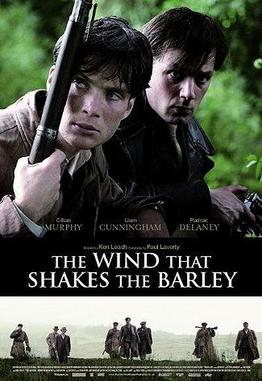
IMDB link
Wikipedia
This is a movie that is set during the Irish War for Independence and the Irish Civil War that follows. It follows two brothers, Damian and Teddy in County Cork.
The movie shows the brutality of the British occupation, with the paras (paramilitary) Black & Tans terrorizing the countryside looking for Republicans (Irish Republican Army) and the effect of this, namely outraged irishmen signing up for the IRA. There is the brutality of the British occupation, and the terrorism of the IRA against those irish who were suspected to cooporate with the British. In it all, Damian (who was going to study to be a doctor before witnessing the needless killing of a friend and the beating of a rail engineer) openly observes his character changing, to the point where he executes a childhood friend as a collaborator.
The violence and brutality make the war personal for many. And after independence is granted, the movie moves on to the next stage of the Irish suffering, the Irish Civil war, fought because some, like Damian, wanted a complete break with Great Britain, not just being a republic in the commonwealth.
And you see Ireland cry in the eyes of the priests who watch a country they had prayed for borne, and shatter from within. And like other civil wars, pits brother against brother.
You ask, what is it that drives men to go to war? What are the ideals that drive them to kill, not just the strangers and outsiders, but those they have known and even fought alongside. During the sections on the Irish Civil War, you see scenes that repeated those of the war for independence. And it seems senseless in this era where the hand of Great Britain lies very lightly on the commonwealth (to this the Canucks, Aussies and Kiwis would laugh at the idea that the British yoke is heavy), but back then the passions of the people were high. And you go away sad at the senselessness of the civil war, for the cause of the perfect instead of the good.
Sunday, November 11, 2007
Saturday, November 10, 2007
Open source develop: assertAlmostEqual
I've been working on a project at work while using Python/Jython. And I'm using unittesting to drive and test the development along the way. Because I deal with things like real data, the usual assertEqual runs into problems when you use floating point computation, because you just don't test for equality in floating point. To much potential for rounding errors at the 20th digit or some other insignificant problem. So you need to use assertAlmostEqual.
And everything is working fine, until I try to run my tests in Jython. And then all my floating point tests start to fail, because assertAlmostEqual does not exist. So, did I spell it wrong, but it worked under normal Python. So a quick google search reveals that assertAlmostEqual was added a bit later, so it was not in Python 2.2 (which Jython is written against). And there is a newsgroup posting in the Python-checkins list about the adding of assertAlmostEqual to the PyUnit testing library (which is what I use for my unit tests).
.
http://projects.scipy.org/pipermail/scipy-user/2002-January/008545.html
Add to reasons for "why contribute to open source programming" story.
And everything is working fine, until I try to run my tests in Jython. And then all my floating point tests start to fail, because assertAlmostEqual does not exist. So, did I spell it wrong, but it worked under normal Python. So a quick google search reveals that assertAlmostEqual was added a bit later, so it was not in Python 2.2 (which Jython is written against). And there is a newsgroup posting in the Python-checkins list about the adding of assertAlmostEqual to the PyUnit testing library (which is what I use for my unit tests).
Ok. That explains that. But something else looks oddly familiar. I remember doing something with SciPy around the same time
http://mail.python.org/pipermail/python-checkins/2002-December/032079.htmlSat, 28 Dec 2002 22:11:50 -0600[Python-checkins] python/nondist/sandbox/twister test_random.py,1.1,1.2
Raymond> To accomodate single precision platforms, only test to seven
    Raymond> digits.

The SciPy folks have added an assertAlmostEqual method to their unit tests.
I believe it more-or-less just wraps what you've done in a callable method
(which takes a number of digits of precision).  Might be a good idea to add
something like it to unittest.py so the wheel doesn't keep getting
reinvented.  They actually have a few variants, coded as functions here:
http://www.scipy.org/site_content/remap?rmurl=http%3A//scipy.net/cgi-bin/viewcvsx.cgi/scipy/scipy_test/testing.py

Skip
.
http://projects.scipy.org/pipermail/scipy-user/2002-January/008545.html
Oh, now I know why this problem looks so familiar. Way back when I was a grad student, I was trying to test some functions. And I ran into the problem about unittesting floating point. So I wrote unittest code to test floating point in SciPy. And it was added to SciPy. And the main Python language developers noticed (since those folks looked to the SciPy/Numpy folks about all things numerical computation related) and added it to the main language. And here I am, five years later, taking advantage of something I did as a grad student.
Sun Jan 20 21:38:03 CST 2002
[SciPy-user] unittests for scipy.stats: assert_almost_equal questionHmmm, I think that I would like to be testing in terms of
significant digits as opposed to decimal places, especially when
working with floating point. Since you are asking for such a test,
here it is. The attached file has a function meant to go into the
scipy_test.py module. I wrote assert_approx_equal following the
same form as assert_almost_equal
assert_approx_equal(actual,desired,significant=7,err_msg='',verbose=1):
compares 'actual' and 'desired' and determines the first
'significant' significant digits and checks for accuracy. Let's
see, I think I counted significant digits correctly. Can anyone
tell?
Louis
> From: "eric"
> To: <scipy-user at scipy.org>
> Subject: Re: [SciPy-user] unittests for scipy.stats:
> assert_almost_equal question
> Date: Sun, 20 Jan 2002 05:36:31 -0500
> Organization: enthought
> Reply-To: scipy-user at scipy.net
>
> Hey Louis,
>
> A thousand blessing upon you. I immediately commited it to the
> CVS!
>
Add to reasons for "why contribute to open source programming" story.
Wednesday, November 07, 2007
Computer development platform Part 2
Last month I started working on a model development aspect of a project. And I figured I'd take the time to learn the use of a new toolkit for programming. An update.
I had a project meeting yesterday that went very well. The approach was sound. The work on the model that I've done already has uncovered issues that have not been addressed by prior work, and this is going to lead to major policy recommendations. All the things that a model developer hopes will happen.
In addition, discussion uncovered some details in the system being modeled that I did not realize (helps when multiple heads get together to tease details out). And we are talking deployment when all is said and done. So, I have a few issues:
Well, this whole thing just screams out, unit testing. As it turns out, I've separated the building block objects from the business logic portions and the database access, which makes the whole thing easier. So, I build my test suite in PyUnit that takes the specifications and builds the model. Then the fun starts.
A very productive day. I almost think that I'm getting the hang of this programming stuff.
I had a project meeting yesterday that went very well. The approach was sound. The work on the model that I've done already has uncovered issues that have not been addressed by prior work, and this is going to lead to major policy recommendations. All the things that a model developer hopes will happen.
In addition, discussion uncovered some details in the system being modeled that I did not realize (helps when multiple heads get together to tease details out). And we are talking deployment when all is said and done. So, I have a few issues:
- The business logic of the model needs to be modified to handle my improved understanding of the process.
- A number of additional scenarios need to be considered, preferably without breaking anything else.
- The whole thing needs to be deployable. And that usually means MS Excel, a Visual Basic application, or Java (because these are things that can be sent to any computer without much trouble)
Well, this whole thing just screams out, unit testing. As it turns out, I've separated the building block objects from the business logic portions and the database access, which makes the whole thing easier. So, I build my test suite in PyUnit that takes the specifications and builds the model. Then the fun starts.
- I was still working on the business logic that allocates resources. It was messy, but it did provide output. So I wrote test cases that tested discrete stages along the way and rewrote the logic into smaller functions.
- Converting to Jython broke some functions, because newer versions of Python had some features that were not in Jython (some forms of introspection). So, I had to rewrite these so they worked under the older language specification, without breaking my test cases.
- Next on the list, write test cases that implement some of the newly described scenarios, and make them work.
A very productive day. I almost think that I'm getting the hang of this programming stuff.
Tuesday, November 06, 2007
Cold Brew Coffee: Attempt # 1
My fiancee was complaining about coffee withdrawal. And one thing we share is a love for good coffee. But doctor's orders. But I half remember that there is a way to make less acidic coffee. And a bit of research revealed cold brew coffee.
The basic premise is the acids and oils are extracted from the coffee bean by the hot water in the brewing process. But cold water will still extract the coffee flavor, without the acids and oils. It just takes a little longer. Like hours instead of minutes. Now, you could buy the Toddy system (created by a guy named Tod) that does this. But that just seems silly. So I figured I'd use my french press for this. Because that is what a french press does, allow ground coffee to soak in water. And I could sacrifice use of my french press for a day. After all, it is going for a good cause.
1. Grind coffee on coarse (i.e. French Press style) for 6 cups worth. I was using Agate Pass Blend from Grounds for Change (a medium-roast bean)
2. Add 1/3 of the ground coffee to the French Press. Add water and ensure that the ground coffee is soaking (i.e. not clumping). Wait 5 minutes
3. Repeat (2). Wait 5 minutes and repeat again with the remainder of the coffee and fill the French Press beaker. If needed, mix gently to ensure the coffee is soaking.
4. Cover press and set aside at room temperature. Time 8:38 AM.
5. Time 10:30 PM. Use French press to separate out the grounds. Pour coffee concentrate into Lexan bottle. Yields 700 ml of concentrate. Refridgerate (for storage. If this was morning, I would have a cup and store the remainder.)

The next morning I made myself two test cups of coffee. The first cup was done at 1 part coffee to 2 parts water (that had been brought to a boil.)

It was ok. Like normal drip coffee (which I find to be weak).
So next I tried again, at 1 part coffee to 1 part water.

Well, this did taste ok. But a bit cold. Next time I should heat up the coffee concentrate first, to make it warmer.
Trial #2
So, after delivering batch #1, try again. This time I set the grinder on a setting halfway between what I use for drip and what I use for French Press.
Brew from 6:00 PM to 7:15 AM. Since it is a finer grind, pour the concentrate through a filter to strain out the silt. This time I filled the French Press up a bit higher so it yielded 800 ml of concentrate.
Prepare at 1 to 1, first microwaving the concentrate before adding the hot water.
It is a decent cup of coffee. Very smooth. Not as flavorful as I would like, but that is probably because of the oils and acids not being in the coffee.
Supposedly, cold brewing coffee yields 1/3 the acidity of drip coffee and people whose stomachs are affected by drip coffee can take this. Hopefully the customer is happy.
The basic premise is the acids and oils are extracted from the coffee bean by the hot water in the brewing process. But cold water will still extract the coffee flavor, without the acids and oils. It just takes a little longer. Like hours instead of minutes. Now, you could buy the Toddy system (created by a guy named Tod) that does this. But that just seems silly. So I figured I'd use my french press for this. Because that is what a french press does, allow ground coffee to soak in water. And I could sacrifice use of my french press for a day. After all, it is going for a good cause.
1. Grind coffee on coarse (i.e. French Press style) for 6 cups worth. I was using Agate Pass Blend from Grounds for Change (a medium-roast bean)
2. Add 1/3 of the ground coffee to the French Press. Add water and ensure that the ground coffee is soaking (i.e. not clumping). Wait 5 minutes
3. Repeat (2). Wait 5 minutes and repeat again with the remainder of the coffee and fill the French Press beaker. If needed, mix gently to ensure the coffee is soaking.
4. Cover press and set aside at room temperature. Time 8:38 AM.
5. Time 10:30 PM. Use French press to separate out the grounds. Pour coffee concentrate into Lexan bottle. Yields 700 ml of concentrate. Refridgerate (for storage. If this was morning, I would have a cup and store the remainder.)
The next morning I made myself two test cups of coffee. The first cup was done at 1 part coffee to 2 parts water (that had been brought to a boil.)
It was ok. Like normal drip coffee (which I find to be weak).
So next I tried again, at 1 part coffee to 1 part water.
Well, this did taste ok. But a bit cold. Next time I should heat up the coffee concentrate first, to make it warmer.
Trial #2
So, after delivering batch #1, try again. This time I set the grinder on a setting halfway between what I use for drip and what I use for French Press.
Brew from 6:00 PM to 7:15 AM. Since it is a finer grind, pour the concentrate through a filter to strain out the silt. This time I filled the French Press up a bit higher so it yielded 800 ml of concentrate.
Prepare at 1 to 1, first microwaving the concentrate before adding the hot water.
It is a decent cup of coffee. Very smooth. Not as flavorful as I would like, but that is probably because of the oils and acids not being in the coffee.
Supposedly, cold brewing coffee yields 1/3 the acidity of drip coffee and people whose stomachs are affected by drip coffee can take this. Hopefully the customer is happy.
Monday, November 05, 2007
In the Company of Soldiers by Rick Atkinson
Rick Atkinson is a historian, who sometimes works for the Washington Post. He took a break from writing his WWII trilogy to be embedded with the U.S. 101 Airborne Division with then Major General Petraeus during the U.S. led invasion of Iraq during 2003.
It is an engrossing picture of a military commander in the midst of a war. The emphasis on logistics (his subordinate commands have to deal with tactics). All the little things that need to be ready. The things that an army prepares out of practicality, even when the political leadership says something completely different (e.g. grappling hooks, battering rams and ladders for urban fighting, when the political and military leadership tells all the U.S. Army does not fight in cities).
When the actual fighting starts, you soon realize that the shooting is elsewhere while the commanders are dealing with other aspects of reality. The maintenance of equipment. The changing and unexpected tactics of the opponents (there is a precious vignette that surrounds General Wallace's quote "this is not the enemy that we wargamed against", and the many generals who said they needed many more troops to do the job right. Both were severely chastized by the political leadership. Both were viewed by those with experience in war as being straightforward and open.) Having to deal with details great and small, unexpected events, the plans of the enemy, and the pressures of a national leadership that may or may not be aware of reality.
It is easy to forget that the senior leadership in war are men themselves. The myriad of details is something impossible to comprehend, and the genius of those who can put it all in their heads, even with the assistance of an able staff, is intimidating to behold. "In the Company of Soldiers" does this well. Not a beatification, but a portrait of a man and an army at war.
It is an engrossing picture of a military commander in the midst of a war. The emphasis on logistics (his subordinate commands have to deal with tactics). All the little things that need to be ready. The things that an army prepares out of practicality, even when the political leadership says something completely different (e.g. grappling hooks, battering rams and ladders for urban fighting, when the political and military leadership tells all the U.S. Army does not fight in cities).
When the actual fighting starts, you soon realize that the shooting is elsewhere while the commanders are dealing with other aspects of reality. The maintenance of equipment. The changing and unexpected tactics of the opponents (there is a precious vignette that surrounds General Wallace's quote "this is not the enemy that we wargamed against", and the many generals who said they needed many more troops to do the job right. Both were severely chastized by the political leadership. Both were viewed by those with experience in war as being straightforward and open.) Having to deal with details great and small, unexpected events, the plans of the enemy, and the pressures of a national leadership that may or may not be aware of reality.
It is easy to forget that the senior leadership in war are men themselves. The myriad of details is something impossible to comprehend, and the genius of those who can put it all in their heads, even with the assistance of an able staff, is intimidating to behold. "In the Company of Soldiers" does this well. Not a beatification, but a portrait of a man and an army at war.
Thursday, November 01, 2007
Beauchamp and the Rule of Second Chances: Pass it Along
At Michael Yon
A few months ago a soldier wrote an article for The New Republic about his ongoing experiences as a soldier in Iraq. He wrote about the activities of his unit. And it was full of stories of how sadistic, cruel, uncaring they had become while deployed to war in Iraq. And for those soldiers who did not become sadistic, how apathetic they became to the violence and depravity around them. Almost like a Hollywood movie about Vietnam with all the expected stereotypes and more. And, as it turned out, completely untrue. Essentially, this soldier wrote the story, and as the editors understanding of war essentially came from Hollywood movies about the Vietnam war, the fact checking was rather spurious.
Now, as the article came out in a prominent forum, the real fact checking began. And in addition to the fact that the stories were false, one other fact that came out was the writer's name. And his unit.
So now we have a problem. Here is a soldier in a combat zone. And he has written an article in a major national magazine that depicts his fellow soldiers as a group of depraved psychopaths. Back in the states, there are individuals writing on internet message boards that he should be punished. Severely. The wolves were calling out for blood. And he is surrounded by the people whom he dragged through the mud. And they all have guns. And they regularly see combat.
So, his company commander gives him a choice. Does he want to transfer. And his commander tells him something else. He is welcome to stay. And he did so.
No doubt there was some awkwardness there. A soldier having to face people whom he had publicly painted as cruel dimwits, when none of the events he described. And it probably was not a pretty thing, of going to battle with people whose relationship is, well, not the best. But there are other realities here. And part of this is the nature of war.
As a society, we (Americans) are generally not a forgiving bunch. Our churches, which like to use words like 'grace' and 'reconciliation' feel free to throw people away (at least the churches I've been to) and forget them as if they did not exist. Our polity is one where perceptions replace truth. And many things are unforgivable. Where disputes are solved by demonizing.
But when life and death is at stake, there is another principle. You have to be able to trust that the person next to you will sacrifice on your behalf. Because you depend on them for your life. And you realize that person, just by being there, also depends on you for theirs. And there are many other things like this, even in non-lethal environments. The fact that there is a common goal overcomes mistakes.
Part of the way we have changes is the separation of our lives from reality. As a society, we have valued a buffer between ourselves and the world, and attempted to insulate ourselves from the pain, hurt, suffering. And along the way sacrifice, trust, and caring for one another have gone as well. There is a saying "no good deed goes unpunished." and a reality that those who would consider helping others, are told that to save a life, is to put your future at risk, and that it is better to turn away from the one in danger, and leave them to their own devices.
With this soldier, for all he has done wrong, there is an understanding that he is there. He still goes out into harms way, alongside others that he is trusting his life with. And they are trusting their lives with him. There may be no way to "pay" for his mistakes. But he is still a comrade in arms. And a very different reaction then "pulling out the hanging rope" for every mistake. It is a different attitude. One of the things observed with the number of soldiers who are coming back from Iraq and Afghanistan, there is now a large pool of people who are Heinlein's human being.
A human being should be able to change a diaper, plan an invasion, butcher a hog, conn a ship, design a building, write a sonnet, balance accounts, build a wall, set a bone, comfort the dying, take orders, give orders, cooperate, act alone, solve equations, analyze a new problem, pitch manure, program a computer, cook a tasty meal, fight efficiently, die gallantly. Specialization is for insects.
So the question, are these enough people who can change a society by their presence? People who are not as self-absorbed, self-righteous, insulating themselves from their environment and others in their faux self-reliance that American society has become. Or will these returning soldiers become examples of people who remember what it is like to stand alongside people from all walks of life, and to depend on one another to succeed and survive.
A few months ago a soldier wrote an article for The New Republic about his ongoing experiences as a soldier in Iraq. He wrote about the activities of his unit. And it was full of stories of how sadistic, cruel, uncaring they had become while deployed to war in Iraq. And for those soldiers who did not become sadistic, how apathetic they became to the violence and depravity around them. Almost like a Hollywood movie about Vietnam with all the expected stereotypes and more. And, as it turned out, completely untrue. Essentially, this soldier wrote the story, and as the editors understanding of war essentially came from Hollywood movies about the Vietnam war, the fact checking was rather spurious.
Now, as the article came out in a prominent forum, the real fact checking began. And in addition to the fact that the stories were false, one other fact that came out was the writer's name. And his unit.
So now we have a problem. Here is a soldier in a combat zone. And he has written an article in a major national magazine that depicts his fellow soldiers as a group of depraved psychopaths. Back in the states, there are individuals writing on internet message boards that he should be punished. Severely. The wolves were calling out for blood. And he is surrounded by the people whom he dragged through the mud. And they all have guns. And they regularly see combat.
So, his company commander gives him a choice. Does he want to transfer. And his commander tells him something else. He is welcome to stay. And he did so.
No doubt there was some awkwardness there. A soldier having to face people whom he had publicly painted as cruel dimwits, when none of the events he described. And it probably was not a pretty thing, of going to battle with people whose relationship is, well, not the best. But there are other realities here. And part of this is the nature of war.
As a society, we (Americans) are generally not a forgiving bunch. Our churches, which like to use words like 'grace' and 'reconciliation' feel free to throw people away (at least the churches I've been to) and forget them as if they did not exist. Our polity is one where perceptions replace truth. And many things are unforgivable. Where disputes are solved by demonizing.
But when life and death is at stake, there is another principle. You have to be able to trust that the person next to you will sacrifice on your behalf. Because you depend on them for your life. And you realize that person, just by being there, also depends on you for theirs. And there are many other things like this, even in non-lethal environments. The fact that there is a common goal overcomes mistakes.
Part of the way we have changes is the separation of our lives from reality. As a society, we have valued a buffer between ourselves and the world, and attempted to insulate ourselves from the pain, hurt, suffering. And along the way sacrifice, trust, and caring for one another have gone as well. There is a saying "no good deed goes unpunished." and a reality that those who would consider helping others, are told that to save a life, is to put your future at risk, and that it is better to turn away from the one in danger, and leave them to their own devices.
With this soldier, for all he has done wrong, there is an understanding that he is there. He still goes out into harms way, alongside others that he is trusting his life with. And they are trusting their lives with him. There may be no way to "pay" for his mistakes. But he is still a comrade in arms. And a very different reaction then "pulling out the hanging rope" for every mistake. It is a different attitude. One of the things observed with the number of soldiers who are coming back from Iraq and Afghanistan, there is now a large pool of people who are Heinlein's human being.
A human being should be able to change a diaper, plan an invasion, butcher a hog, conn a ship, design a building, write a sonnet, balance accounts, build a wall, set a bone, comfort the dying, take orders, give orders, cooperate, act alone, solve equations, analyze a new problem, pitch manure, program a computer, cook a tasty meal, fight efficiently, die gallantly. Specialization is for insects.
So the question, are these enough people who can change a society by their presence? People who are not as self-absorbed, self-righteous, insulating themselves from their environment and others in their faux self-reliance that American society has become. Or will these returning soldiers become examples of people who remember what it is like to stand alongside people from all walks of life, and to depend on one another to succeed and survive.
Monday, October 22, 2007
What I did last Saturday
AKA the engagement story

I'm given to understand there is a much better story teller who may be available to you. But, here is my version.
1. Morning - Woken up at 5:00 AM to go to a house fire on the South Side. And by the time I get to the Red Cross, I find out there was a second fire on the North Side. Go and perform damage assessment, case work with clients, and get home around 9:00 AM, and go to bed.
2. Woke up, again, around 12 Noon. Afternoon was with S at a house warming party of a former neighbor of mine (Hi R and T). We ate real well, with home cooked Thai food that I have not had in years. And there were lots of kids running around (they ranged from 21 months to 6 years, yes, they were running). I cooked an apple cobbler for dessert. S played the piano (very happy piano).
3. After being stuffed with Thai food, we went to Phipps Conservatory, where we went to the Chihuly exhibit (glass sculptures in garden [ok, I'll skip some not so necessary details, but the blog post is titled "What I did last Saturday"]). It was open that evening because, well, Chihuly glass sculptures that are lit a night in a gardenare rather romantic-y sort of things, so gardens can make a lot of money with all the couples who like going on walks in lit gardens with beautiful glass sculptures around. Or so I am led to understand (I'm a member, got to understand these things.)
4. When we were done, there was this one sculpture that I suggested might look real nice close up, which would require going outside. Where there was a very handy bench that looked into the proper window.
5. And, yes, said sculpture looked very nice. And I asked S if she would marry me. And I gave her a certain ring that I had in my pocket. Which also looked very nice.
6. Oh, she did say "yes"
Congratulations on making it to the end. And thanks for reading.
I'm given to understand there is a much better story teller who may be available to you. But, here is my version.
1. Morning - Woken up at 5:00 AM to go to a house fire on the South Side. And by the time I get to the Red Cross, I find out there was a second fire on the North Side. Go and perform damage assessment, case work with clients, and get home around 9:00 AM, and go to bed.
2. Woke up, again, around 12 Noon. Afternoon was with S at a house warming party of a former neighbor of mine (Hi R and T). We ate real well, with home cooked Thai food that I have not had in years. And there were lots of kids running around (they ranged from 21 months to 6 years, yes, they were running). I cooked an apple cobbler for dessert. S played the piano (very happy piano).
3. After being stuffed with Thai food, we went to Phipps Conservatory, where we went to the Chihuly exhibit (glass sculptures in garden [ok, I'll skip some not so necessary details, but the blog post is titled "What I did last Saturday"]). It was open that evening because, well, Chihuly glass sculptures that are lit a night in a gardenare rather romantic-y sort of things, so gardens can make a lot of money with all the couples who like going on walks in lit gardens with beautiful glass sculptures around. Or so I am led to understand (I'm a member, got to understand these things.)
4. When we were done, there was this one sculpture that I suggested might look real nice close up, which would require going outside. Where there was a very handy bench that looked into the proper window.
5. And, yes, said sculpture looked very nice. And I asked S if she would marry me. And I gave her a certain ring that I had in my pocket. Which also looked very nice.
6. Oh, she did say "yes"
Congratulations on making it to the end. And thanks for reading.
Sunday, October 21, 2007
I wonder if anyone reads this
If so, this may be interesting news (understanding that reasonable people may disagree). Anyway, as of last week, S and I are engaged.

Saturday, October 20, 2007
The Utility of Force: The Art of War in the Modern World by Rupert Smith
Amazon.com link
General Rupert Smith (UK, Ret.) wrote this after reflection on 40 years of service, including UN duty in the Balkans. The theme of the book is that the nature of conflict has changed, and those who think about the use of national power (diplomatic, information, military, economic). Smith identifies 6 major trends:
- The ends for which we fight are changing
- We fight amongst the people
- Our conflicts tend to be timeless
- We fight so as not to lose the force
- On each occasion new uses are found for old weapons
- The sides are mostly non-state
As he discusses the evolution of modern conflict, and the information(media) and intelligence focus (as opposed to purely physical) of future conflict, he has as a backdrop the United Nations intervention in the Balkans during the 1990s. And the ineffectiveness of the UN forces there, culminating in the massacre of 7,000+ Bosnians by the Serbs in the "safe area" of Srebrenica. Smith points out that the UN members essentially employed a tactic (use of blocking forces) to counter a strategy (Serbian desire to dominate the Balkans) and the Serbians used a wide range of means (propaganda, military, diplomatic) to make the UN military forces irrelevant.
Smith is mostly documenting a problem, one that he views as difficult, and something for U.S. and western nations need to deal with. Because as long as there is a desire to have a world that is not full of the arbitrary violence, ethnic massacres, generators of hate, the west and those that have allied with them will ask their militaries and other instruments of power to enter these parts of the world. And these militaries will have to learn how to operate in these settings. Smith's challenge is that they be sent in a thoughtful way, that the ends are considered with the quality, quantity and purpose of the forces made appropriate to the ends desired. And just how you decide this, are lessons yet to be learned.
This is not an easy book to read. Every passage is meant to be read, then the consequences of every idea thought through. Even the descriptions of historical events have to be mulled in consideration of many facets and the environment around them. But the reader is rewarded with many considerations of thought and issues to debate. And a context for reading anything else in this subject area.
General Rupert Smith (UK, Ret.) wrote this after reflection on 40 years of service, including UN duty in the Balkans. The theme of the book is that the nature of conflict has changed, and those who think about the use of national power (diplomatic, information, military, economic). Smith identifies 6 major trends:
- The ends for which we fight are changing
- We fight amongst the people
- Our conflicts tend to be timeless
- We fight so as not to lose the force
- On each occasion new uses are found for old weapons
- The sides are mostly non-state
As he discusses the evolution of modern conflict, and the information(media) and intelligence focus (as opposed to purely physical) of future conflict, he has as a backdrop the United Nations intervention in the Balkans during the 1990s. And the ineffectiveness of the UN forces there, culminating in the massacre of 7,000+ Bosnians by the Serbs in the "safe area" of Srebrenica. Smith points out that the UN members essentially employed a tactic (use of blocking forces) to counter a strategy (Serbian desire to dominate the Balkans) and the Serbians used a wide range of means (propaganda, military, diplomatic) to make the UN military forces irrelevant.
Smith is mostly documenting a problem, one that he views as difficult, and something for U.S. and western nations need to deal with. Because as long as there is a desire to have a world that is not full of the arbitrary violence, ethnic massacres, generators of hate, the west and those that have allied with them will ask their militaries and other instruments of power to enter these parts of the world. And these militaries will have to learn how to operate in these settings. Smith's challenge is that they be sent in a thoughtful way, that the ends are considered with the quality, quantity and purpose of the forces made appropriate to the ends desired. And just how you decide this, are lessons yet to be learned.
This is not an easy book to read. Every passage is meant to be read, then the consequences of every idea thought through. Even the descriptions of historical events have to be mulled in consideration of many facets and the environment around them. But the reader is rewarded with many considerations of thought and issues to debate. And a context for reading anything else in this subject area.
Thursday, October 18, 2007
Why is the use of anthropology a contentious issue?
From an Anthropological Perspective
There has been a debate that has been going on for years among social scientist, in particular anthropologists. Should anthropologists cooperate with the military (or any other government organization for that matter)? The negative side points out that anthropology was created as a colonial tool (to put it bluntly) and that as a discipline, they should repudiate all such work. The affirmative side argues (1) pretty much everything in applied anthropology causes effects on the society examine, whether on behalf of corporate interests, or non-profit (whose motives don't always look much more noble then the colonial white-man's-burden) (2) the negative side seems to imply that anthropology should not be used to mitigate or prevent cultural damage. If they can't do that, what is the use of anthropology (other than for corporations to exploit people or non-profits to manipulate a society)? I'm being slightly simplistic here. The link provides a much more nuanced view. Searches for 'anthropology' and 'military' should find articles in the New York Times, the BBC and various anthropology and military sites.
In one sense, the issue is somewhat moot. The military (at least the American tradition) is bound to fill the mission given to it by its civilian leaders. If accomplishing that mission is best done by having people study the society that exists in the environment to avoid the use of destructive force when it can be avoided, the military would do so. Whether or not people who have the word "anthropologist" in their resumes are involved is quite irrelevant. Even if it would make things easier if there were some at hand. (if not, the military will make do with who they can find who is available.)
There is a bigger question on the anthropologists side. What is the role and substance of ethics? Is ethics an avoidance of labels that don't sound nice? Is ethics a list of "thou shalt nots." Are both the ends and the means irrelevant, if the perceived "ultimate end" is "wrong" (the quotes are because the "ultimate end" and "wrong" are not as defined by the doer, but by an uninvolved party who has noone's interests in mind, namely the anthropological profession, which is divided.)
In general, this is probably the problem with ethics, especially as practiced in non-practitioner settings. Ethics tends to be discussed as what is wrong, not what should be done. In other words, what not to do. And the principles that are seized on to decide the what not to do become absolute and definitive. To the exclusion of all others. Including human life. In my interaction, people will hold to these principles even when the life that is to be lost has been identified (which is the case here as well.)
For many professions, the focus of training is on what (and how) to do. In an environment where everything is focused on acting, negatively based ethics quickly becomes irrelevant. (i.e. the U.S. Army will study the cultures it works among to determine non-destructive ways of solving conflict, regardless of the collective decision of the anthropological community.) And the members of the academic disciplines that would prefer to actual engage their world for positive ends, rather than withdraw to avoid breaking rules, or look for areas of activity that are not addressed (such as social anthropology by marketers and advertising), are faced with professional isolation, or creating a new profession.
There has been a debate that has been going on for years among social scientist, in particular anthropologists. Should anthropologists cooperate with the military (or any other government organization for that matter)? The negative side points out that anthropology was created as a colonial tool (to put it bluntly) and that as a discipline, they should repudiate all such work. The affirmative side argues (1) pretty much everything in applied anthropology causes effects on the society examine, whether on behalf of corporate interests, or non-profit (whose motives don't always look much more noble then the colonial white-man's-burden) (2) the negative side seems to imply that anthropology should not be used to mitigate or prevent cultural damage. If they can't do that, what is the use of anthropology (other than for corporations to exploit people or non-profits to manipulate a society)? I'm being slightly simplistic here. The link provides a much more nuanced view. Searches for 'anthropology' and 'military' should find articles in the New York Times, the BBC and various anthropology and military sites.
In one sense, the issue is somewhat moot. The military (at least the American tradition) is bound to fill the mission given to it by its civilian leaders. If accomplishing that mission is best done by having people study the society that exists in the environment to avoid the use of destructive force when it can be avoided, the military would do so. Whether or not people who have the word "anthropologist" in their resumes are involved is quite irrelevant. Even if it would make things easier if there were some at hand. (if not, the military will make do with who they can find who is available.)
There is a bigger question on the anthropologists side. What is the role and substance of ethics? Is ethics an avoidance of labels that don't sound nice? Is ethics a list of "thou shalt nots." Are both the ends and the means irrelevant, if the perceived "ultimate end" is "wrong" (the quotes are because the "ultimate end" and "wrong" are not as defined by the doer, but by an uninvolved party who has noone's interests in mind, namely the anthropological profession, which is divided.)
In general, this is probably the problem with ethics, especially as practiced in non-practitioner settings. Ethics tends to be discussed as what is wrong, not what should be done. In other words, what not to do. And the principles that are seized on to decide the what not to do become absolute and definitive. To the exclusion of all others. Including human life. In my interaction, people will hold to these principles even when the life that is to be lost has been identified (which is the case here as well.)
For many professions, the focus of training is on what (and how) to do. In an environment where everything is focused on acting, negatively based ethics quickly becomes irrelevant. (i.e. the U.S. Army will study the cultures it works among to determine non-destructive ways of solving conflict, regardless of the collective decision of the anthropological community.) And the members of the academic disciplines that would prefer to actual engage their world for positive ends, rather than withdraw to avoid breaking rules, or look for areas of activity that are not addressed (such as social anthropology by marketers and advertising), are faced with professional isolation, or creating a new profession.
Friday, October 12, 2007
and at night you become a superhero - and other quotes
I spent the last weekend doing a lot of emergency service work, both as a ham radio operator at the Head of the Ohio and for a Red Cross exercise. Some quotes:
"Next time there is someone who is vitally important to the running of the whole show and she refuses a shadow, give her one anyway."
Me: "Hi. I'm your shadow. Your not allowed to get lost anymore."
Me: "You are going to sit down, under a tent, in the shadow, and I am going to watch you drink this bottle of water and eat a protein bar." (at 3PM, on a very hot day)
"I told them that they needed to turn around, and they started telling me how the river was free for everyone. Then I told them that is ok, and the Coast Guard will be coming by to talk to them. They said, 'The Coast Guard?!' Yes, the same U.S. Coast Guard that issues your licenses and put up the Notice To Mariners that is on your marina board saying that the river is closed today, and has been broadcasting messages on Marine Radio every half hour telling you that the river is closed. And they are coming to you."
Coast Guard: "Oh, we saw them. And we stopped to chat. And they were very agreeable."
Coast Guard: "I think we will go over there and say hi. And discourage anyone from heading in the river too fast."
Actress playing resident who was not quite all there and was trying to 'escape': "I want to go for a walk."
Me: "Oh fun, I want to go for a walk with you. Over here is a go outside for a walk place (pointing at a door that led to a courtyard, that was not out)"
Actress: "Oh, you're no fun. I can't even be mean to you."
Actress from a previous exercise: "Hi, remember me?"
Later in the day: "I'm hurt, you were avoiding me all day."
Disaster volunteer: "I work in marketing, it is so boring."
Me: "So then at night you put on your Red Cross shirt and become a superhero."
Volunteer: "I should show you what my phone says. 'Wonder Woman'"
"Next time there is someone who is vitally important to the running of the whole show and she refuses a shadow, give her one anyway."
Me: "Hi. I'm your shadow. Your not allowed to get lost anymore."
Me: "You are going to sit down, under a tent, in the shadow, and I am going to watch you drink this bottle of water and eat a protein bar." (at 3PM, on a very hot day)
"I told them that they needed to turn around, and they started telling me how the river was free for everyone. Then I told them that is ok, and the Coast Guard will be coming by to talk to them. They said, 'The Coast Guard?!' Yes, the same U.S. Coast Guard that issues your licenses and put up the Notice To Mariners that is on your marina board saying that the river is closed today, and has been broadcasting messages on Marine Radio every half hour telling you that the river is closed. And they are coming to you."
Coast Guard: "Oh, we saw them. And we stopped to chat. And they were very agreeable."
Coast Guard: "I think we will go over there and say hi. And discourage anyone from heading in the river too fast."
Actress playing resident who was not quite all there and was trying to 'escape': "I want to go for a walk."
Me: "Oh fun, I want to go for a walk with you. Over here is a go outside for a walk place (pointing at a door that led to a courtyard, that was not out)"
Actress: "Oh, you're no fun. I can't even be mean to you."
Actress from a previous exercise: "Hi, remember me?"
Later in the day: "I'm hurt, you were avoiding me all day."
Disaster volunteer: "I work in marketing, it is so boring."
Me: "So then at night you put on your Red Cross shirt and become a superhero."
Volunteer: "I should show you what my phone says. 'Wonder Woman'"
Monday, October 08, 2007
[Chicago Tribune] Man dies in heat-shortened (Chicago) marathon
Chicago Tribune article
My sister sent me a text message yesterday letting me know that the Chicago Marathon was shortened. Other than my general interest in running marathons, I did try to enter this one back in May, but it was already full.
So, the issues, other then the obvious. Actually, one person dieing is not enough cancel an event like this. Or even to dissuade potential participants. People participate in physical events because of the harsh reality that they represent. Most people live in worlds that are governed by perception, not reality. Activities in the physical world such as running, bicycling, backpacking, etc. are a forum where reality and truth are incontestable, and the laws of the natural world provide a court that is often without appeal. And the grim fact is, you need to acknowledge this on the course. (this does not really apply to school athletic teams. For high schools and colleges, part of what the kids are learning are these very limits, and coaches are supposed to be teaching this, and about other aspects of the realities of life.) Those who can't or won't acknowledge this, suffer and sometimes die.
But the bigger issue is what is going on outside the race. Reports are that 315 runners were removed by EMTs for heat-related conditions, and 146 people were taken to hospitals. That many hospitalizations due to a single event is known as a disaster. The American Red Cross of Greater Chicago activated the patient connection program, which is usually done for major disasters. And realizing that it was going to get worse, as the morning went into early afternoon, turning off the clocks and telling people to walk was acknowledging reality as emergency rooms throughout the city and suburbs took in patients.
No doubt that this as well as the Rotterdam (?) marathon that were cut short earlier this year will be case studies for all those who organize these types of events. One thing I've been learning as I get older, and see these events from the points of view of participant, organizer, emergency support, communications, etc. is seeing how all these different priorities are balanced out. And how people make tough decisions.
My sister sent me a text message yesterday letting me know that the Chicago Marathon was shortened. Other than my general interest in running marathons, I did try to enter this one back in May, but it was already full.
So, the issues, other then the obvious. Actually, one person dieing is not enough cancel an event like this. Or even to dissuade potential participants. People participate in physical events because of the harsh reality that they represent. Most people live in worlds that are governed by perception, not reality. Activities in the physical world such as running, bicycling, backpacking, etc. are a forum where reality and truth are incontestable, and the laws of the natural world provide a court that is often without appeal. And the grim fact is, you need to acknowledge this on the course. (this does not really apply to school athletic teams. For high schools and colleges, part of what the kids are learning are these very limits, and coaches are supposed to be teaching this, and about other aspects of the realities of life.) Those who can't or won't acknowledge this, suffer and sometimes die.
But the bigger issue is what is going on outside the race. Reports are that 315 runners were removed by EMTs for heat-related conditions, and 146 people were taken to hospitals. That many hospitalizations due to a single event is known as a disaster. The American Red Cross of Greater Chicago activated the patient connection program, which is usually done for major disasters. And realizing that it was going to get worse, as the morning went into early afternoon, turning off the clocks and telling people to walk was acknowledging reality as emergency rooms throughout the city and suburbs took in patients.
No doubt that this as well as the Rotterdam (?) marathon that were cut short earlier this year will be case studies for all those who organize these types of events. One thing I've been learning as I get older, and see these events from the points of view of participant, organizer, emergency support, communications, etc. is seeing how all these different priorities are balanced out. And how people make tough decisions.
Book Review: Usagi Yojimbo - Fathers and Sons
(written at Goodreads: Amazon link)
The hero, Usagi, is a ronin (unattached samurai) in a historical Japan after the great wars. As such, he is in the midst of a time of change, which much conflict, but most of it is not in the open. The social order is changing, and Usagi is finding his place in it. Along the way, he is joined by his son, Jotaro. But Jotaro does not realize he is Usagi's son, and knows Usagi as an uncle.
In this volume and volume 18 they travel through Japan to Jotaro's new teacher (who was Usagi's teacher). Along the way they meet many of Usagi's friends, encounter those who are also trying to carve out places for themselves in a new Japanese society (some of them through intimidation and violence), and other fathers, who are also trying to provide for and teach their sons the ways of the world and their place in it. One recurring bit of amusement occurs when Usagi's friends and others that encounter them along the way identify Jotaro as Usagi's son, even as they are introduced to Jotaro as a nephew, as they observe how they interact with each other.
Stan Sakai creates an engaging world with characters that are rich in motivation and backgrounds. Many lessons are taught and learned. Many mistakes are made, and there is even nobility and courage. And when you are done, you wish them well, those that continue their journey, and those that are left behind.
There is a strain of the arts that presents the purpose of the arts is to present the human condition, in its richness, grandeur, and in the mundane. And this is a fine example of this.
The hero, Usagi, is a ronin (unattached samurai) in a historical Japan after the great wars. As such, he is in the midst of a time of change, which much conflict, but most of it is not in the open. The social order is changing, and Usagi is finding his place in it. Along the way, he is joined by his son, Jotaro. But Jotaro does not realize he is Usagi's son, and knows Usagi as an uncle.
In this volume and volume 18 they travel through Japan to Jotaro's new teacher (who was Usagi's teacher). Along the way they meet many of Usagi's friends, encounter those who are also trying to carve out places for themselves in a new Japanese society (some of them through intimidation and violence), and other fathers, who are also trying to provide for and teach their sons the ways of the world and their place in it. One recurring bit of amusement occurs when Usagi's friends and others that encounter them along the way identify Jotaro as Usagi's son, even as they are introduced to Jotaro as a nephew, as they observe how they interact with each other.
Stan Sakai creates an engaging world with characters that are rich in motivation and backgrounds. Many lessons are taught and learned. Many mistakes are made, and there is even nobility and courage. And when you are done, you wish them well, those that continue their journey, and those that are left behind.
There is a strain of the arts that presents the purpose of the arts is to present the human condition, in its richness, grandeur, and in the mundane. And this is a fine example of this.
Saturday, October 06, 2007
Shadowing The Head of the Ohio
The Head of the Ohio (HOTO) was this past Saturday. (Hi Jonathan) Like the other Head of . . . races, it is the capstone of the rowing season for Pittsburgh, and probably the biggest event of the year. In Pittsburgh, the main sponsoring organization seems to the be the Three Rivers Rowing Association. I was there as amateur (ham) radio support to the race organizers, and I was shadowing the volunteer coordinator. Regattas like this all have a similar structure. Most people thing of these as intercollegiate (or even high school) events, because most of us get exposed to this because of our college friends who row crew. But these are bigger. Unlike most sporting events, the Head of . . . series are a lot more then one division. There are high school, collegiate, and club teams competing (each in their own division) and they do it together.
There are lots of sports/activities that make claim to being like family. This bunch has as good a claim as any, as you see an entire cross section of ages at these. The high school and college students (like you expect), the high school parents, but you also get the adults who row who like to race. And their families (both younger generation and older generation.) the result is even the high school kids get to see a whole community of people, all taking part in the same activity at various levels. And these people have been around each other for years (especially the club rowers), so the usual high school athlete parent gets integrated with a large community that his/her child is being brought up into, a community of adults the child can respect on many levels, and all eager to be present as they mature.
So what do you see at such things? With such a cross section of people, engaging each other in a very public place, a wide range. In addition to the usual frustrations and joy of working with a wide range of people in a big event, you see generosity, selfishness, grace under pressure, people cracking under pressure, the range of motivations, courtesy, response to discourtesy, deciding what battles to fight, and which ones not to. How to influence others without using authority. How to use authority wisely (and effectively). A whole host of lessons. Both for the kids, and for the not very old (like me) to learn. And many people who are hoping we (including me) learn them, so as we take our places in the community, we are able to take their places.
This was my second event as part of Amateur Radio Emergency Services (ARES). And this was the classic scenario. Radio operator shadows official, provides multi-modal communications between official and others, sometimes when other modes are not operational. There were various fires (metaphoric) to be put out. Minor crisis. And one medical. Oh, and a couple older hams who could explain what they did, how they did it, and a bit of institutional knowledge that comes from doing things over years. And yes, there are a couple roles that I could be playing in that community in the years to come, if I stick around and get more training and experience. These are people who know how to look into the future.
There are lots of sports/activities that make claim to being like family. This bunch has as good a claim as any, as you see an entire cross section of ages at these. The high school and college students (like you expect), the high school parents, but you also get the adults who row who like to race. And their families (both younger generation and older generation.) the result is even the high school kids get to see a whole community of people, all taking part in the same activity at various levels. And these people have been around each other for years (especially the club rowers), so the usual high school athlete parent gets integrated with a large community that his/her child is being brought up into, a community of adults the child can respect on many levels, and all eager to be present as they mature.
So what do you see at such things? With such a cross section of people, engaging each other in a very public place, a wide range. In addition to the usual frustrations and joy of working with a wide range of people in a big event, you see generosity, selfishness, grace under pressure, people cracking under pressure, the range of motivations, courtesy, response to discourtesy, deciding what battles to fight, and which ones not to. How to influence others without using authority. How to use authority wisely (and effectively). A whole host of lessons. Both for the kids, and for the not very old (like me) to learn. And many people who are hoping we (including me) learn them, so as we take our places in the community, we are able to take their places.
This was my second event as part of Amateur Radio Emergency Services (ARES). And this was the classic scenario. Radio operator shadows official, provides multi-modal communications between official and others, sometimes when other modes are not operational. There were various fires (metaphoric) to be put out. Minor crisis. And one medical. Oh, and a couple older hams who could explain what they did, how they did it, and a bit of institutional knowledge that comes from doing things over years. And yes, there are a couple roles that I could be playing in that community in the years to come, if I stick around and get more training and experience. These are people who know how to look into the future.
Wednesday, October 03, 2007
Computer development platform
Well, I've started modeling work on a project at work. So far it has been data gathering planning (what kind of data do we need) and asking lots of questions about the system I'm trying to model. And, while that is not over, now that I'm back in Pittsburgh, time to get started. Right now, I'm actually doing the "make the first one to throw away" thing. Because this is so amorphous, I'm not sure just how to solve this just yet anyway. I told the project manager this, and he actually likes the idea as a risk management principle. (because version 2 is supposed to be deployable, let's just forget about that until I have a model that works, then worry about making it deployable)
Now, a lot of this is the fact that I'm working in a domain that not too many modelers have gone in. Slides that I've built for presentations in the past have gotten real good reception, as people who have seen this get the idea, and the possible impact. Of course now I have to deliver.
Since I get to work on that most idealized of environments, clean slate and zero previous work to build on, I thought I would actually try to do things right. And take the opportunity to build up a new tool chest. For now, documentation is in LaTeX, with Dia to build up flow charts and UMLish diagrams. I'm reading Head First Design Patterns by Freeman and Freeman, and some ideas have gotten in my head.
For the model building, there is an idea in the back of my head that deployment will be inside MS Excel and Visual Basic (because everything quantitative is deployed inside MS Excel and Visual Basic). But because the tools are just hard to develop in, and it quickly turns unmanageable, even when done right, I'll probably use Python and/or R to develop the initial model. One big benefit is the various algorithm libraries that are readily available in Python and R as well as the automatic documentation tools like Docstrings, PyUnit and Sweave. And I've actually used all of them.
For the tool chain, LaTeX and Dia and Python. But, since I had to get a new laptop anyway, and needed to reinstall my tools, why not try something new. I'm doing almost everything inside of the Eclipse IDE, specifically the EasyEclipse version of it. In addition to Java development (which I may end up doing non of, unless I switch into Jython), it handles LaTeX (through TeXlipse), Python, through Pydev), database access, and version control through Subversion. First time I've used many of these tools before. It is rather nice. TeXlipse is much better then the JEdit or Vim that I've used in the past since it does command completion, and it seems even better then TeXnicCenter that I did my thesis in. Having version control as an integral part of the IDE is wonderful. I've tried it in the past and it just got too bulky, even with a graphic interface. Now it is just a button click. Auto-build in Eclipse is nice too. Having a window with the results updated with every save means near-realtime feedback. Since Dia saves diagrams as XML, that works in a version control system also. So all my notes, the documentation, diagrams and the source code will all be in version control. I almost feel like I know what I am doing with this development thing.
Of course, the real fun starts next. Going from all my diagrams to actual code and data.
Now, a lot of this is the fact that I'm working in a domain that not too many modelers have gone in. Slides that I've built for presentations in the past have gotten real good reception, as people who have seen this get the idea, and the possible impact. Of course now I have to deliver.
Since I get to work on that most idealized of environments, clean slate and zero previous work to build on, I thought I would actually try to do things right. And take the opportunity to build up a new tool chest. For now, documentation is in LaTeX, with Dia to build up flow charts and UMLish diagrams. I'm reading Head First Design Patterns by Freeman and Freeman, and some ideas have gotten in my head.
For the model building, there is an idea in the back of my head that deployment will be inside MS Excel and Visual Basic (because everything quantitative is deployed inside MS Excel and Visual Basic). But because the tools are just hard to develop in, and it quickly turns unmanageable, even when done right, I'll probably use Python and/or R to develop the initial model. One big benefit is the various algorithm libraries that are readily available in Python and R as well as the automatic documentation tools like Docstrings, PyUnit and Sweave. And I've actually used all of them.
For the tool chain, LaTeX and Dia and Python. But, since I had to get a new laptop anyway, and needed to reinstall my tools, why not try something new. I'm doing almost everything inside of the Eclipse IDE, specifically the EasyEclipse version of it. In addition to Java development (which I may end up doing non of, unless I switch into Jython), it handles LaTeX (through TeXlipse), Python, through Pydev), database access, and version control through Subversion. First time I've used many of these tools before. It is rather nice. TeXlipse is much better then the JEdit or Vim that I've used in the past since it does command completion, and it seems even better then TeXnicCenter that I did my thesis in. Having version control as an integral part of the IDE is wonderful. I've tried it in the past and it just got too bulky, even with a graphic interface. Now it is just a button click. Auto-build in Eclipse is nice too. Having a window with the results updated with every save means near-realtime feedback. Since Dia saves diagrams as XML, that works in a version control system also. So all my notes, the documentation, diagrams and the source code will all be in version control. I almost feel like I know what I am doing with this development thing.
Of course, the real fun starts next. Going from all my diagrams to actual code and data.
Booknerd stuff
I just put in a first batch of books into Goodreads. So, where did I start (anyone who has seen my apartment or looked at my boxes when packing to move realizes that this is a serious undertaking)? I started with all 36 books that I have reviewed on Bookshelved
One thing that means is for this first batch, I have real reviews actually written up. So I'll probably get them moved over to Goodreads soon, and I'll actually have content.
Anyway, this sort of stuff is somewhat more valuable if people I know were on it. In particular, people who read books that I may like. So, if you read things about:
history
current affairs
science fiction
nature
computer (programming and software design)
science/math
Well, it would be nice to see you on it. (oh, yeah, most of my book club is already on there. No, we do not read books on any of the above topics in my book club.) Oh, and invite me :-)
One thing that means is for this first batch, I have real reviews actually written up. So I'll probably get them moved over to Goodreads soon, and I'll actually have content.
Anyway, this sort of stuff is somewhat more valuable if people I know were on it. In particular, people who read books that I may like. So, if you read things about:
history
current affairs
science fiction
nature
computer (programming and software design)
science/math
Well, it would be nice to see you on it. (oh, yeah, most of my book club is already on there. No, we do not read books on any of the above topics in my book club.) Oh, and invite me :-)
Monday, October 01, 2007
Book social network: Goodreads, Shelfari, iRead, LibraryThings ??
Something that caught my eye, social networks for reading. Ok, what first got me was my fellow book club members inviting me onto Goodreads. And Goodreads is on Facebook as well. Now, in the past, I have put my book reviews on Bookshelved. But I don't actually know anyone else on there in real life. And there is a rather high effort required to enter a book (you have to create a page on a wiki. And I feel obligated to write something somewhat serious.) But these networks with their automatic linking to other people that you know seems to be interesting.
So, all of you book readers, question: Are you on one of these networks and are you putting up book reviews (either star ratings or actual reviews)?
The big ones I've found are Goodreads, iRead, LibraryThing, Shelfari. Of these, iRead is ONLY on Facebook (a big negative to me). Goodreads and Shelfari can be subscribed separately from Facebook, but can be integrated. Goodreads also has a widget like Flickr does to put a sidebar on a web site like Blogspot sites. LibraryThings I think has a fee after 200 books (I think I'm going to get above that eventually). And I rather like the idea of Facebook integration.
Right now, it seems I have friends on Goodreads and iRead, but I'm curious as to what other people are doing before I go through the effort of putting books on them.
So, all of you book readers, question: Are you on one of these networks and are you putting up book reviews (either star ratings or actual reviews)?
The big ones I've found are Goodreads, iRead, LibraryThing, Shelfari. Of these, iRead is ONLY on Facebook (a big negative to me). Goodreads and Shelfari can be subscribed separately from Facebook, but can be integrated. Goodreads also has a widget like Flickr does to put a sidebar on a web site like Blogspot sites. LibraryThings I think has a fee after 200 books (I think I'm going to get above that eventually). And I rather like the idea of Facebook integration.
Right now, it seems I have friends on Goodreads and iRead, but I'm curious as to what other people are doing before I go through the effort of putting books on them.
Pittsburgh Great Race Sunday 30 September 2007
Another running of the Great Race, the capstone race in the Pittsburgh season now that the marathon is no longer being run. This will be my third running (and I arrived in Pittsburgh a year too late to run the marathon). The biggest difference, I only ran the 5K instead of the 10K.
S, A and I took the bus from downtown to Oakland at the starting line on Fifth amidst the University of Pittsburgh and the behemoth of UPMC. Some highlights:
The Pitt Men's Glee Club singing the national anthem, straight up. Just the way I like it. You can play with "God Bless America" all you want, but the "Star Spangled Banner" is impressive by itself.
Mayor Luke greeted the runners, noting that his wife was running the race. Now, while I'm glad he made it out there, and I hope he enjoyed it, the one thought: Wuss! Your wife is running a biggest race in Pittsburgh and your not! Whose the man here!? Ah, the days when Murphy would greet the runners and then get in the starting area with the rest of us.
There were a few new sponsors (Someone from KDKA got to speak). I hope they got a good show. I heard a rumor of the return of the Pittsburgh Marathon, and happy sponsors would be a good step in that direction.
It is fun seeing the city again. Running through Oakland. Along the Mon. Past Duquense with the rump band and cheerleaders. And flying down the ramp onto Boulevard of the Allies to the end. Oh, and the usual Eat 'n Park Smiley cookie.
And all three of us had our "Running for Joe" shirts. Had to wear something, right?

S, A and I took the bus from downtown to Oakland at the starting line on Fifth amidst the University of Pittsburgh and the behemoth of UPMC. Some highlights:
The Pitt Men's Glee Club singing the national anthem, straight up. Just the way I like it. You can play with "God Bless America" all you want, but the "Star Spangled Banner" is impressive by itself.
Mayor Luke greeted the runners, noting that his wife was running the race. Now, while I'm glad he made it out there, and I hope he enjoyed it, the one thought: Wuss! Your wife is running a biggest race in Pittsburgh and your not! Whose the man here!? Ah, the days when Murphy would greet the runners and then get in the starting area with the rest of us.
There were a few new sponsors (Someone from KDKA got to speak). I hope they got a good show. I heard a rumor of the return of the Pittsburgh Marathon, and happy sponsors would be a good step in that direction.
It is fun seeing the city again. Running through Oakland. Along the Mon. Past Duquense with the rump band and cheerleaders. And flying down the ramp onto Boulevard of the Allies to the end. Oh, and the usual Eat 'n Park Smiley cookie.
And all three of us had our "Running for Joe" shirts. Had to wear something, right?
Wednesday, September 26, 2007
Letters from Iwo Jima
Directed by Clint Eastwood
This is the kind of film that only an American could make. A film of war, from the point of view of the enemy. It is of Japanese forces who were assigned the task of defending Iwo Jima against the oncoming Americans during World War II. And, in stark contrast to any other war movie, it portrays the imperial Japanese forces as human. With fears, wondering about the what is to come, and wondering about what the enemy is like. Iwo Jima was known as a place where the Japanese were particularly crafty, forsaking some of the stark militarism and bravado for a well prepared defense. The industrial war that the United States had developed to such effectiveness in air and naval bombardment turned out to be ineffective, and the Marines involved won the island at high cost, against an adversary that forced them to pay dearly for the island.
One of the chief lessons that I took care to emphasize in Afghanistan was the craftiness of our opposition. When I worked with newly arriving sergeants I made a point of reminding them of this, and giving examples. One thing that "Letters" does well in the first half is show the dilemma that opposing leaders have when fighting the United States, how do you combat an opponent who has what seems to be unlimited resources? And the intelligence that is needed to do this with honor.
The movie is based on the records of letters home from the Japanese commanding general, written in the days leading up to the American invasion. And they are very human, without the blind bravado that Hollywood usually casts upon the enemy (historical or fictional). They are a mix of fanatic, afraid, fearful of the future, honorable, and driven by shame, sometimes in sequence and sometimes many at once.
Some of the most touching parts are the scenes where the general or the main character are writting letters home. What they are doing that day, what they feel. And reading letters from their wives about the home front. It is very human, and very real. And I can completely relate, having spent the last 20 minutes reading all the letters I received while deployed.
This is the kind of film that only an American could make. A film of war, from the point of view of the enemy. It is of Japanese forces who were assigned the task of defending Iwo Jima against the oncoming Americans during World War II. And, in stark contrast to any other war movie, it portrays the imperial Japanese forces as human. With fears, wondering about the what is to come, and wondering about what the enemy is like. Iwo Jima was known as a place where the Japanese were particularly crafty, forsaking some of the stark militarism and bravado for a well prepared defense. The industrial war that the United States had developed to such effectiveness in air and naval bombardment turned out to be ineffective, and the Marines involved won the island at high cost, against an adversary that forced them to pay dearly for the island.
One of the chief lessons that I took care to emphasize in Afghanistan was the craftiness of our opposition. When I worked with newly arriving sergeants I made a point of reminding them of this, and giving examples. One thing that "Letters" does well in the first half is show the dilemma that opposing leaders have when fighting the United States, how do you combat an opponent who has what seems to be unlimited resources? And the intelligence that is needed to do this with honor.
The movie is based on the records of letters home from the Japanese commanding general, written in the days leading up to the American invasion. And they are very human, without the blind bravado that Hollywood usually casts upon the enemy (historical or fictional). They are a mix of fanatic, afraid, fearful of the future, honorable, and driven by shame, sometimes in sequence and sometimes many at once.
Some of the most touching parts are the scenes where the general or the main character are writting letters home. What they are doing that day, what they feel. And reading letters from their wives about the home front. It is very human, and very real. And I can completely relate, having spent the last 20 minutes reading all the letters I received while deployed.
Tuesday, September 25, 2007
Working The Weight
This article brings back good memories. One of my regular workouts was to put on the body armor and walk around the base with a buddy of mine.
From http://www.strategypage.com
September 25, 2007: Some soldiers are using the 30 pound protective vest as a physical conditioning aid, both in the gym and outside. Today's combat soldiers and marines are, like professional athletes, very much into physical conditioning. A little extra speed and strength on the battlefield can save your life. This is especially true now that the protective vest, with all the attachments, weighs in at 30 pounds. Troops headed for the combat zone, wear the vest during all their training. But other have found that wearing the vest in the gym, or while running, helps as well. The more you move about with the vest on, the more you develop the muscles, and lung capacity, that support the weight.
From http://www.strategypage.com
After the first rotation of combat troops came back from Iraq and Afghanistan, some noticed that they were in pretty good physical shape. Those who were deep into physical conditioning quickly figured out that the heavy protective vest was having the same impact as training weights, that are worn to build up certain muscles. Even soldiers who don't particularly like running or doing calisthenics with the vest on, realize that this will make life easier for them when they get back to the combat zone.
Wednesday, September 19, 2007
PRT mission to improve Health Care in Khost, Afghanistan
Video clip
This was a good clip to watch, not the least because I know some of the people in it.
There was a New York Times article a couple days ago titled "Building a Dam in a Bid to End Afghan Stability." And the two say a lot about working in Afghanistan. As part of the new ways of doing things, American and ISAF forces in Afghanistan are focusing on building the country, as opposed to hunting down bad guys (not that anyone will walk away from a fight, just that for the most part, the troops are not looking for one.) Of course, as ISAF adds to the health care, builds infrastructure, educates children, builds local governance, it strengthens the Islamic Republic of Afghanistan (IRoA) as a country. It does this by building ties between the local population and the population as a whole, something that did not exist before. And as a generation of children are educated, given health care, and connected to the world beyond their own tribe, a country is created, where there has not been a real country forever. For all the civilizations that have gone into the Hindu Kush to conquer it (and left), none have ever tried to build up the human capital of the area, until now. And the local population is fully aware of what that means for the future.
And the Taliban is also aware of what this means for the future. And so they destroy roads, dams, kill doctors, destroy schools, and intimidate the population into not supporting the efforts and work that is needed to create all of these things. In the long run, this is destructive, and everyone knows it. But they can't get to the long run unless they survive the short term. And here lies the truth of insurgency/counterinsurgency (at least where the United States is involved). Even when everything is being done for the good of the population, in the end, the insurgents have one argument, "do not help the IRoA, or we will kill you." For all the good that our forces and resources could do, every individual Afghan has to ask the question "will I live to benefit?"
Has it always been this way? No, within the U.S. military there has been great debate on if this is part of war. The initial efforts in Afghanistan and Iraq were led by those who believed that this had no place in the work of the military. The current efforts are those who say if the U.S. does not succeed in this, they fail in the whole thing, and the "successes" that were achieved in combat amount to nothing (which is a story that the U.S. has seen before). There is a story of a retired U.S. Army officer, who when talking with one of the officers who has played a part in developing the counterinsurgency doctrine that many are now trying to implement said "it would be sad if twice in a lifetime we would fail to learn the same lessons."
I was asked by friends "what does it feel to be a part of history." Well, my work there ended up fitting squarely into this development of theory. And the realization that I was intimately involved in a new way of looking at war, had me in awe.
This was a good clip to watch, not the least because I know some of the people in it.
There was a New York Times article a couple days ago titled "Building a Dam in a Bid to End Afghan Stability." And the two say a lot about working in Afghanistan. As part of the new ways of doing things, American and ISAF forces in Afghanistan are focusing on building the country, as opposed to hunting down bad guys (not that anyone will walk away from a fight, just that for the most part, the troops are not looking for one.) Of course, as ISAF adds to the health care, builds infrastructure, educates children, builds local governance, it strengthens the Islamic Republic of Afghanistan (IRoA) as a country. It does this by building ties between the local population and the population as a whole, something that did not exist before. And as a generation of children are educated, given health care, and connected to the world beyond their own tribe, a country is created, where there has not been a real country forever. For all the civilizations that have gone into the Hindu Kush to conquer it (and left), none have ever tried to build up the human capital of the area, until now. And the local population is fully aware of what that means for the future.
And the Taliban is also aware of what this means for the future. And so they destroy roads, dams, kill doctors, destroy schools, and intimidate the population into not supporting the efforts and work that is needed to create all of these things. In the long run, this is destructive, and everyone knows it. But they can't get to the long run unless they survive the short term. And here lies the truth of insurgency/counterinsurgency (at least where the United States is involved). Even when everything is being done for the good of the population, in the end, the insurgents have one argument, "do not help the IRoA, or we will kill you." For all the good that our forces and resources could do, every individual Afghan has to ask the question "will I live to benefit?"
Has it always been this way? No, within the U.S. military there has been great debate on if this is part of war. The initial efforts in Afghanistan and Iraq were led by those who believed that this had no place in the work of the military. The current efforts are those who say if the U.S. does not succeed in this, they fail in the whole thing, and the "successes" that were achieved in combat amount to nothing (which is a story that the U.S. has seen before). There is a story of a retired U.S. Army officer, who when talking with one of the officers who has played a part in developing the counterinsurgency doctrine that many are now trying to implement said "it would be sad if twice in a lifetime we would fail to learn the same lessons."
I was asked by friends "what does it feel to be a part of history." Well, my work there ended up fitting squarely into this development of theory. And the realization that I was intimately involved in a new way of looking at war, had me in awe.
Saturday, September 15, 2007
Pittsburgh Symphony Orchestra 2007-2008 season gala quotes
"You two look real good. Is someone going to take your picture?"
Well, since she was asking, of course we asked if she could.
"I know you, do you work for ___? We met at the Korean picnic" (three years ago!)
"Welcome back. We're glad you are safe"
"I don't mind that you can't remember girls names"
Well, since she was asking, of course we asked if she could.
"I know you, do you work for ___? We met at the Korean picnic" (three years ago!)
"Welcome back. We're glad you are safe"
"I don't mind that you can't remember girls names"
Wednesday, September 12, 2007
The Afghan Campaign by Steven Pressfield
The Afghan Campaign
This is about a soldier in the time of Alexander the Great of Macedon, around 330 BC. Alexander the Great has conquered everywhere using standard tactics of drawing out his enemy and defeating it on the battlefield. And he has conquered the Persian empire, the greatest in the world. And, on the way to the riches of India, lay the Hindu Kush, present day Afghanistan.
The Afghan Campaign is written from the point of view of a new soldier. During the war against the Persians Matthias joins the Macedonian army, following in the footsteps of his brothers. However, he is too late to join in the glorious wars against the Persians. But, he arrives in the Hindu Kush, after the main battle. But the war is not over. Over the course of the campaign, Matthias sees victory, loss. Friends are killed in barbaric ways and he takes part in atrocities that make him sick. His family gives his support, and his fiance leaves him. And at the end, he is frustrated with the war, has the spoils of war that his brother tells him to take home, and decides to continue with Alexander.
So, what is the point? Why this pseudo-history of the ancient world? The question for this is not to present a history, but to present an experience. So, do I think it is accurate, all things considered. And, well, it is. When you are in the middle of things, you don't have too much time to think about the big picture, unless you have that kind of position. Your general thoughts as far as war is concerned are about the day in question. But there are times to think about other things. You are very concerned about your comrade around you, their fortunes, successes, failures. Their hurts and their victories are shared and felt by you. And you think of loved ones behind. Of people back home who support and love you. Of those who have forgotten you. And those who have let you go and gone their own way.
Someone asked me if I missed anything about serving in Afghanistan, it was that. The sense that we shared in the struggles, successes and frustrations of each other. The guy who we all said had the worst job in the office, as he was having his direction of effort changed
almost hourly, and never could get what he was doing done well enough to be satisfying. The senior officer who did not have a well defined job, who spent his time making snide remarks and complaining about little mickey mouse issues. The guys who got regular packages and letters from home (I was one of them), especially the newlywed whose wife sent him a package including baked cookies weekly (the winner). We worried about the guy who was a bit of a loner and never got packages (and were real relieved when his mother sent something). I loved it when all the guys on the staff were pulling for me when I gave a big presentation that needed very senior officer support, giving me feedback, suggestions, and general "ask for whatever help you need" support. We talked to our families and shared in the fustrations, joys, stories (funny, sad, frustrating and proud). The ideas, dreams and hopes we had for the future. All the things that make us real human beings. And Pressfield presents that well, both the good and the bad.
Obviously, the book is for a certain type of person. The gore exists, as it is also a part of war. But it is not there for its own sake. It is there because it is part of the environment that shapes the people. And to that extent, it, like some of his other works (e.g. Gates of Fire), does the job wonderfully.
This is about a soldier in the time of Alexander the Great of Macedon, around 330 BC. Alexander the Great has conquered everywhere using standard tactics of drawing out his enemy and defeating it on the battlefield. And he has conquered the Persian empire, the greatest in the world. And, on the way to the riches of India, lay the Hindu Kush, present day Afghanistan.
The Afghan Campaign is written from the point of view of a new soldier. During the war against the Persians Matthias joins the Macedonian army, following in the footsteps of his brothers. However, he is too late to join in the glorious wars against the Persians. But, he arrives in the Hindu Kush, after the main battle. But the war is not over. Over the course of the campaign, Matthias sees victory, loss. Friends are killed in barbaric ways and he takes part in atrocities that make him sick. His family gives his support, and his fiance leaves him. And at the end, he is frustrated with the war, has the spoils of war that his brother tells him to take home, and decides to continue with Alexander.
So, what is the point? Why this pseudo-history of the ancient world? The question for this is not to present a history, but to present an experience. So, do I think it is accurate, all things considered. And, well, it is. When you are in the middle of things, you don't have too much time to think about the big picture, unless you have that kind of position. Your general thoughts as far as war is concerned are about the day in question. But there are times to think about other things. You are very concerned about your comrade around you, their fortunes, successes, failures. Their hurts and their victories are shared and felt by you. And you think of loved ones behind. Of people back home who support and love you. Of those who have forgotten you. And those who have let you go and gone their own way.
Someone asked me if I missed anything about serving in Afghanistan, it was that. The sense that we shared in the struggles, successes and frustrations of each other. The guy who we all said had the worst job in the office, as he was having his direction of effort changed
almost hourly, and never could get what he was doing done well enough to be satisfying. The senior officer who did not have a well defined job, who spent his time making snide remarks and complaining about little mickey mouse issues. The guys who got regular packages and letters from home (I was one of them), especially the newlywed whose wife sent him a package including baked cookies weekly (the winner). We worried about the guy who was a bit of a loner and never got packages (and were real relieved when his mother sent something). I loved it when all the guys on the staff were pulling for me when I gave a big presentation that needed very senior officer support, giving me feedback, suggestions, and general "ask for whatever help you need" support. We talked to our families and shared in the fustrations, joys, stories (funny, sad, frustrating and proud). The ideas, dreams and hopes we had for the future. All the things that make us real human beings. And Pressfield presents that well, both the good and the bad.
Obviously, the book is for a certain type of person. The gore exists, as it is also a part of war. But it is not there for its own sake. It is there because it is part of the environment that shapes the people. And to that extent, it, like some of his other works (e.g. Gates of Fire), does the job wonderfully.
Saturday, September 08, 2007
Sunday, September 02, 2007
Some pictures
Some pictures from the past few months. I suppose a philosophical thought may come to me at some point.
Afghanistan pictures
Afghanistan pictures
Saturday, September 01, 2007
Home
First thoughts.
Apartment feels big. Walls are far away. Lots of stuff in luggage and boxes that are looking for a home. Boxes of mail. Already paid bills.
Clean kitchen.
Good company.
Apartment feels big. Walls are far away. Lots of stuff in luggage and boxes that are looking for a home. Boxes of mail. Already paid bills.
Clean kitchen.
Good company.
Wednesday, August 29, 2007
Word of the Day: downrange
downrange: shooting. The part of a shooting range where bullets are going i.e. the target and backstop.
Military. A combat zone.
Usage: "How long have you been downrange?"
Tuesday, August 28, 2007
Sunday, August 26, 2007
Word of the Day: Popping Smoke
Smoke: Particulate that is carried in the air and is visible to the eye.
Popping smoke: Lighting pyrotechnic device to generate dense clouds of colored smoke. Used in signaling aircraft from the ground and to identify specific locations. Especially used in marking pickup spots for personnel extraction by aircraft.
Popping smoke: Leaving, especially very quickly.
Usage: "When are you popping smoke?"
Popping smoke: Lighting pyrotechnic device to generate dense clouds of colored smoke. Used in signaling aircraft from the ground and to identify specific locations. Especially used in marking pickup spots for personnel extraction by aircraft.
Popping smoke: Leaving, especially very quickly.
Usage: "When are you popping smoke?"
Friday, August 24, 2007
Good hunting
We found a praying mantis nearby our living quarters this evening. The best thing we could think of: we wished her good hunting.
QOTD: It is pink. It may as well be contaminated
P1: "My wife had to get a new cell phone"
P1: "It is pink. It might as well be contaminated"
P2: "Does that mean you can't use it? How secure are you in your masculinity?"
Later
P1: "(young daughter), did mommy get a new phone? What color is it? Where you with her when she got it? Did you pick the pink phone?"
P1: "It is pink. It might as well be contaminated"
P2: "Does that mean you can't use it? How secure are you in your masculinity?"
Later
P1: "(young daughter), did mommy get a new phone? What color is it? Where you with her when she got it? Did you pick the pink phone?"
Thursday, August 23, 2007
QTOD: Have you read those books?
I was giving a collegue some books I had in PDF
P1: Have you read all those books?
Me: I'm from ____. One thing we know how to do is read.
P1: Have you read ___ by ___ ___?
Me: I even cited him in my brief.
P1: Have you read all those books?
Me: I'm from ____. One thing we know how to do is read.
P1: Have you read ___ by ___ ___?
Me: I even cited him in my brief.
Monday, August 20, 2007
Sunday, August 19, 2007
Independence Day!
August 19th is celebrated as Afghanistan Independence Day, when Afghanistan achieved full independence from Britain. It is probably a testament to the attitude towards things that Britain tends to celebrate along side its former colonies during their independence day celebrations, even when the actual event was not exactly love and kisses.
The usual parades of armed power. And speeches. The week has been one marked by honesty in public. President Karzai talking about the importance of education. Rather strange for a President of a country that is covered in war and conflict. But
There is a realization that the end of this is when the Afghan are educated enough to govern themselves. Or my way of putting it, when the children we are putting through school now become the elders and leaders of Afghanistan.
The usual parades of armed power. And speeches. The week has been one marked by honesty in public. President Karzai talking about the importance of education. Rather strange for a President of a country that is covered in war and conflict. But
Karzai said the Afghan people must be ready to make sacrifices for the country's freedom, but also need to focus on education.
"Without education, technology and science we will be under the attack of the foreigners," Karzai said. "For an independent Afghanistan, our youths have to get an education."
There is a realization that the end of this is when the Afghan are educated enough to govern themselves. Or my way of putting it, when the children we are putting through school now become the elders and leaders of Afghanistan.
Tuesday, August 14, 2007
NYTimes: You Win This War By Drinking Tea
New York Times
This is a fun sounding book. In 1943 American and allied soldiers were in Iraq, because Nazi Germany was threatening to conquer it via Syria. The article is an interview with LTC John Nagl, an American officer known for his book "Learning to Eat Soup With a Knife." Me makes the comment that it sure seemed like we knew alot about Iraq back in 1943. A "charming" book, with illustrations, written in a more hopeful, less irony-filled time. Back when we were sure we were fighting evil.
The article title came out of one of the points that Nagl talks about. I remember being dragged by a shopkeeper who wanted to get me to buy a rug. Brought me into his shop, and immediately offered chai. Very recognizable story.
There is a lot to be said about referencing the past. When I wrote my dissertation, one of my goals was to have at least one citation older then I was. I was successful. I also was able to do the same in a presentation I gave for work. One of the most compelling slides that I have. This is a difficult business, marked by what is unknown as much as is known. Using the advantages of other people's hindsight sems like a good thing.
This is a fun sounding book. In 1943 American and allied soldiers were in Iraq, because Nazi Germany was threatening to conquer it via Syria. The article is an interview with LTC John Nagl, an American officer known for his book "Learning to Eat Soup With a Knife." Me makes the comment that it sure seemed like we knew alot about Iraq back in 1943. A "charming" book, with illustrations, written in a more hopeful, less irony-filled time. Back when we were sure we were fighting evil.
The article title came out of one of the points that Nagl talks about. I remember being dragged by a shopkeeper who wanted to get me to buy a rug. Brought me into his shop, and immediately offered chai. Very recognizable story.
There is a lot to be said about referencing the past. When I wrote my dissertation, one of my goals was to have at least one citation older then I was. I was successful. I also was able to do the same in a presentation I gave for work. One of the most compelling slides that I have. This is a difficult business, marked by what is unknown as much as is known. Using the advantages of other people's hindsight sems like a good thing.
Saturday, August 11, 2007
Word of the Day: Chief's Initiation
Chief: Chief Petty Officer - Senior non-commissioned officer in the U.S. Navy. Position of responsibility and leadership. Expected to be a leader of men (and women), a master of his area of knowledge, and a teacher of skills and traditions. Also noted by the wearing of khaki's instead of dungerees, a sign that you are now a leader who directs other.
Chief's Initiation: Ceremony commemorating new Chief's. A time of solemn recognition. Also a time of incredulity of how some sailor was able to con his superiors into regarding him a person of maturity. Where old salts look at these new guys and wonder if they have what it takes, and put them through many tests of their, umm, endurance, resiliance, intelligence (wisdom? these new guys?) because they want to see just how much these new guys can take. Definitely not something to tell mom all the details.
Usually remembered as one of the happiest days in the guy's life.
Congratulations Smokey!
Chief's Initiation: Ceremony commemorating new Chief's. A time of solemn recognition. Also a time of incredulity of how some sailor was able to con his superiors into regarding him a person of maturity. Where old salts look at these new guys and wonder if they have what it takes, and put them through many tests of their, umm, endurance, resiliance, intelligence (wisdom? these new guys?) because they want to see just how much these new guys can take. Definitely not something to tell mom all the details.
Usually remembered as one of the happiest days in the guy's life.
Congratulations Smokey!
Thursday, August 09, 2007
Word of the Day: Hail & Farewell
Ceremony where new arrivals are welcomed and people departing are recognized. Usually paired, as the goal is to have a bit of overlap. Hails are generally simple. Farewells can include roasts, many praises, sometimes a gift of appreciation.
Saturday, August 04, 2007
Word of the Day: Short
Short
usage:
1. Are you getting short?
2. How short are you? He's so short he can look up at a dime.
The state of being when your assignment is close to an end. Long form: short timer. Symptoms: the number of days left in the assignment is recalled instantly by the person in question, as well as anyone who spends more then 10 seconds with the person in a day. Viewing the pages in the calendar below the current month as worthless. Boxes being used to get stuff out instead of bringing stuff in. Office mates looking around and thinking about rearranging all the furniture as the desk and shelves will be cleaned out. Everything done is associated with the question "How are we going to do this when ___ is not here?"
usage:
1. Are you getting short?
2. How short are you? He's so short he can look up at a dime.
The state of being when your assignment is close to an end. Long form: short timer. Symptoms: the number of days left in the assignment is recalled instantly by the person in question, as well as anyone who spends more then 10 seconds with the person in a day. Viewing the pages in the calendar below the current month as worthless. Boxes being used to get stuff out instead of bringing stuff in. Office mates looking around and thinking about rearranging all the furniture as the desk and shelves will be cleaned out. Everything done is associated with the question "How are we going to do this when ___ is not here?"
Monday, July 30, 2007
Fallen comrade ceremony
A message over email. Fallen comrade ceremony.
Check the details. There is the time.
Here the announcement over the Giant Voice "There will be a fallen comrade ceremony at . . ." One hour. Enough time to eat.
Finish dinner. Walk out to the road. People are starting to line the road. Spot a buddy and walk over next to him.
People chatting about anything and everything.
"There will be a fallen comrade ceremony in 15 minutes"
Still chatting, but finding our spots along the line.
No words spoken, but then the chatter dies. Lines of men and women. Looking across at each other. Legs spread, hands behind back. Silent and serious.
A car comes by. Snap to attention. A second car. With the coffin and flag in the back. Salutes from the men and women in uniform. Hold it. A third car comes. A camera films the lines of men and women at attention. Soon, someone will see this video. And they will know that their son/daughter/husband/wife/brother/sister was remembered with honor.
Salutes are dropped. And we disperse. Back to do our duty.
Check the details. There is the time.
Here the announcement over the Giant Voice "There will be a fallen comrade ceremony at . . ." One hour. Enough time to eat.
Finish dinner. Walk out to the road. People are starting to line the road. Spot a buddy and walk over next to him.
People chatting about anything and everything.
"There will be a fallen comrade ceremony in 15 minutes"
Still chatting, but finding our spots along the line.
No words spoken, but then the chatter dies. Lines of men and women. Looking across at each other. Legs spread, hands behind back. Silent and serious.
A car comes by. Snap to attention. A second car. With the coffin and flag in the back. Salutes from the men and women in uniform. Hold it. A third car comes. A camera films the lines of men and women at attention. Soon, someone will see this video. And they will know that their son/daughter/husband/wife/brother/sister was remembered with honor.
Salutes are dropped. And we disperse. Back to do our duty.
Saturday, July 28, 2007
Second-story man
I locked myself out of my hooch today (our rooms are padlocked)
Me: Could you do me a favor?
P1: Yeah, sure.
Me: Could you open my door when I pass my key out? I'm going to hop the wall
P1: *confused look* ok
So, I jumped the wall, and passed my key out. And he opened my door.
I wonder if I have a new career option here?
Me: Could you do me a favor?
P1: Yeah, sure.
Me: Could you open my door when I pass my key out? I'm going to hop the wall
P1: *confused look* ok
So, I jumped the wall, and passed my key out. And he opened my door.
I wonder if I have a new career option here?
Sunday, July 22, 2007
Book Review: Harry Potter and the Deathly Hallows
Saturday marked the release of the final book of the Harry Potter series. Any my base exchange had a stack of them. Now, I did not get around to buying it until after dinner, but with the time difference, I figure I did not do too bad in getting to it.
There were a lot of stories about the book. One was a logistics company who arranged to get a couple cases on the first flight to Kabul from Dubai after the book release. The TV shows were marveling how they got the book into a war zone on the first day. My favorite story has to be about the Clackamas Town Center (OR) Barnes & Noble that was in the New York Times. They offered the first spot in line to a teacher, who was getting married that night, and was going from the reception, not to a hotel room, but to the bookstore. The plan is that the honeymoon would be a week from then, presumably giving her time to read the book first. Priorities.
Like the other Harry Potter books, this one has a theme of choices over background, that
you are not a product of your environment, the labels that are on you, your parents, but you are a product of your choices. And as promised, this book continues the darkening tone that has been progressing since the Goblet of Fire. Yet more people die. Evil is ascendant. And in a sophistication completely unexpected, the book gives a description of people involved in an honest-to-goodness-insurgency in their proper english shopkeeper sort of way. I found that particularly entertaining
But even so, this is definitely a book aimed at younger (teenage) readers. The Harry angst that got really annoying in Half-Blood Prince is still in full form, but at least JKR let other characters join in the self-destructive attitudes in the midst of something deadly serious. The jealousy and child crush side plotlines in the midst of serious hazard would have been pathetic if I did not know people like that (and not just kids, fortunately, not where I am now) I also don't like dream sequences in general, and the chapters where we go through the memories in the Pensieve seem like cheating, alot like the holodeck episodes in Star Treck: The Next Generation. Although, the scenes where Harry and Voldemort connect in each others minds actually comes across quite well, probably because of the heavy toll it takes on Harry (and apparently Vodemort as well.
But what makes this book work is the steadily growing sense of doom. That evil is growing ever stronger and the heroes and their friends grow deeper into peril at every turn. Learning that at every page the enemy has attained another victory, has gotten stronger, and has gotten closer to its main goal, while our heroes are more weary, discouraged, friends are lost or fall away out of despair. With just enough successes not to fail, we reach the last desparate end. And we actually do not believe that any character or cause is immune from being lost.
JKR did seem to have to tie up too many plotlines, including some that probably would not have been noticed if they were not tied up. The Snape plotline was too clever by half. It probably entertained (no toyed with) those who got caught up in "Snape Friend/Snape Foe" marketing. But JKR probably hit her audience right, this is a children's/young adult book.
The ending was satisfying. Grief, resignation, pain, joy, gladness, healing and hurt all rolled up in one, like many other grand endeavors. Not super deep, but very entertaining. as intended. And I did read the whole thing that first night. Also probably intended.
There were a lot of stories about the book. One was a logistics company who arranged to get a couple cases on the first flight to Kabul from Dubai after the book release. The TV shows were marveling how they got the book into a war zone on the first day. My favorite story has to be about the Clackamas Town Center (OR) Barnes & Noble that was in the New York Times. They offered the first spot in line to a teacher, who was getting married that night, and was going from the reception, not to a hotel room, but to the bookstore. The plan is that the honeymoon would be a week from then, presumably giving her time to read the book first. Priorities.
Like the other Harry Potter books, this one has a theme of choices over background, that
you are not a product of your environment, the labels that are on you, your parents, but you are a product of your choices. And as promised, this book continues the darkening tone that has been progressing since the Goblet of Fire. Yet more people die. Evil is ascendant. And in a sophistication completely unexpected, the book gives a description of people involved in an honest-to-goodness-insurgency in their proper english shopkeeper sort of way. I found that particularly entertaining
But even so, this is definitely a book aimed at younger (teenage) readers. The Harry angst that got really annoying in Half-Blood Prince is still in full form, but at least JKR let other characters join in the self-destructive attitudes in the midst of something deadly serious. The jealousy and child crush side plotlines in the midst of serious hazard would have been pathetic if I did not know people like that (and not just kids, fortunately, not where I am now) I also don't like dream sequences in general, and the chapters where we go through the memories in the Pensieve seem like cheating, alot like the holodeck episodes in Star Treck: The Next Generation. Although, the scenes where Harry and Voldemort connect in each others minds actually comes across quite well, probably because of the heavy toll it takes on Harry (and apparently Vodemort as well.
But what makes this book work is the steadily growing sense of doom. That evil is growing ever stronger and the heroes and their friends grow deeper into peril at every turn. Learning that at every page the enemy has attained another victory, has gotten stronger, and has gotten closer to its main goal, while our heroes are more weary, discouraged, friends are lost or fall away out of despair. With just enough successes not to fail, we reach the last desparate end. And we actually do not believe that any character or cause is immune from being lost.
JKR did seem to have to tie up too many plotlines, including some that probably would not have been noticed if they were not tied up. The Snape plotline was too clever by half. It probably entertained (no toyed with) those who got caught up in "Snape Friend/Snape Foe" marketing. But JKR probably hit her audience right, this is a children's/young adult book.
The ending was satisfying. Grief, resignation, pain, joy, gladness, healing and hurt all rolled up in one, like many other grand endeavors. Not super deep, but very entertaining. as intended. And I did read the whole thing that first night. Also probably intended.
QOTD: water pressure
P1: That was cruel sir, saying there is hot water pressure when there really is cold water pressure
P2: *chuckles*
Me: You realize (P1 was obviously young, and new) that the key word here is "water pressure"
P2: *chuckles*
Me: You realize (P1 was obviously young, and new) that the key word here is "water pressure"
Monday, July 16, 2007
QOTD: On mission
I was on a flight back to my home base, going through the mountains (this IS the Hindu Kush afterall). Clear skies. beautiful weather, but going through the mountains was rather bumpy.
P1: I hope the next time I do that is never.
P2: Well, we certainly got our money's worth
Me: Yeah, they even through in the free sauna (A/C was not working too well)
At the air terminal checking back in. Me being rather tired, disoriented and slightly dehydrated after loosing 10 lbs in the sauna/flight
Clerk: Were you on R&R, leave, or on mission?
Me: On mission
Looking back on it. That felt good.
P1: I hope the next time I do that is never.
P2: Well, we certainly got our money's worth
Me: Yeah, they even through in the free sauna (A/C was not working too well)
At the air terminal checking back in. Me being rather tired, disoriented and slightly dehydrated after loosing 10 lbs in the sauna/flight
Clerk: Were you on R&R, leave, or on mission?
Me: On mission
Looking back on it. That felt good.
Thursday, July 12, 2007
The Cellist of Sarejevo
At this time, I have my iPod on, listening to Yo-Yo Ma playing "The Cellist of Sarejevo" by David Wilde. During the 1990's Siege of Sarajevo, a group of civilians in a breadline were killed by a mortar attack. Vedran Smailovi?, principle cellist of the Sarejevo Opera Orchestra, spent the next 22 days playing his cello in the crater of that mortar attack in their memory. In the open, amidst the mortars, bullets and debris of war. During the seige, he would play at funerals, in an environment where snipers hid in cemetaries to target those mourning their dead. This was a turbulent time. A Yugoslavia, which to the outside world a model of a multi-ethnic, multi-cultural nation, fell apart after the death of its strongman. And after two generations of being a nation together, they set upon themselves in an orgy of destruction. It was a time when soldiers went in under the UN banner, and were themselves targeted by those who wanted nothing of peace. And then the Americans and NATO went, and people who were facing genocide saw a future.
I'm listening to Yo-Yo Ma play Wilde's lament, and I am around some of those who, as young men and women, went to Bosnia in time of war. I'm listening to the sadness of a musician mourning the death of friends, while earlier this month Americans and Bosnians celebrate the transfer of Tuzla airbase in Bosnia, once the main NATO base in Bosnia, celebrating the end of that suffering, and a hope that a war can end, even as others rage.
Americans have a much deserved reputation of not listening, as a rule. But there are exceptions, as the Bosnians in Tuzla bear witness to as they celebrate. I don't know if there was a young American in Tuzla in the 1990s who did as I am doing, listening to a cello lamenting the Siege of Sarajevo while serving in their defense. But for myself, to listen to Yo-Yo Ma play, or a piece of Tchaikovsky, Beethoven or Ravel, is to listen to stories they have to say. And my world would be that much poorer and smaller if I did not have it to listen to.
I'm listening to Yo-Yo Ma play Wilde's lament, and I am around some of those who, as young men and women, went to Bosnia in time of war. I'm listening to the sadness of a musician mourning the death of friends, while earlier this month Americans and Bosnians celebrate the transfer of Tuzla airbase in Bosnia, once the main NATO base in Bosnia, celebrating the end of that suffering, and a hope that a war can end, even as others rage.
Americans have a much deserved reputation of not listening, as a rule. But there are exceptions, as the Bosnians in Tuzla bear witness to as they celebrate. I don't know if there was a young American in Tuzla in the 1990s who did as I am doing, listening to a cello lamenting the Siege of Sarajevo while serving in their defense. But for myself, to listen to Yo-Yo Ma play, or a piece of Tchaikovsky, Beethoven or Ravel, is to listen to stories they have to say. And my world would be that much poorer and smaller if I did not have it to listen to.
Friday, July 06, 2007
Word of the Day: Geobach
Geobach: short for geographic bachelor. Person on an assignment that separates him/her from family for a period of a few years. Usually, done so that the spouse and children are spared the burden of a move that would last only a few years. Note: actual deployments do not count, only moves that involve a change of address.
Quote of the day:
P1: If there was a jeep in Barbie pink, would you get it?
P2: You better believe it. If it is Barbie pink or hot pink, I'm all over it.
P3: What about your son?
P2: Well, he just has to suck it up or he walks.
Quote of the day:
P1: If there was a jeep in Barbie pink, would you get it?
P2: You better believe it. If it is Barbie pink or hot pink, I'm all over it.
P3: What about your son?
P2: Well, he just has to suck it up or he walks.
Wednesday, July 04, 2007
Flag raising July 4, 2007
"No better friend, no worse enemy" "First, do no harm" These were the orders given by Marine General James Mattis, on his second tour in Iraq. And these are words that make being an American different then the great powers that have gone before.
Afghanistan is a poor country, surrounded by giants. The Hindu Kush has been invaded on conquered by the Medians, the Persians, the Macedonians of Alexander the Great, the Kushans, the Mongul Khans, Tamerlane, the British and the Soviets. Each of these empires eventually found the land too much trouble to keep, and not even worth the effort to wipe out the population (as the Khans and Tamerlane were known to do). And none of them bothered to invest in the population. Until the Americans came. For the first time, resources are being invested in the population. People are given skills, children are educated. And we wait for this generation of children to grow up and take their places in the villages, towns, cities and institutions. While others hope we tire first, and they can continue to use this as a place to hide, filling the population with fear of punishment, and tales that the world has turned their backs.
So, is this American (United States) venture worth it? A friend of mine once asked, "why do we care if there are atrocities. Isn't all fair in love and war?" And the question is, what kind of world do you want to live in? It may be true for most people that in force is power, that perception is often more important than truth, that noone can be trusted. But there is a large part of the American experiment that wants to say that the truth does matter, that force is made stronger when it is driven by justice and protection, that the bonds of a people who chose to be bound together in a varied nation can be strong, such that it can be trusted alongside bonds of kin, and there is no need to set one against the other. It is, after all, a grand experiment. And there are enough people who believe it to have failed or want it to fail so that hoping for its success is an affirmative act. And I am glad to be a part of it.

Afghanistan is a poor country, surrounded by giants. The Hindu Kush has been invaded on conquered by the Medians, the Persians, the Macedonians of Alexander the Great, the Kushans, the Mongul Khans, Tamerlane, the British and the Soviets. Each of these empires eventually found the land too much trouble to keep, and not even worth the effort to wipe out the population (as the Khans and Tamerlane were known to do). And none of them bothered to invest in the population. Until the Americans came. For the first time, resources are being invested in the population. People are given skills, children are educated. And we wait for this generation of children to grow up and take their places in the villages, towns, cities and institutions. While others hope we tire first, and they can continue to use this as a place to hide, filling the population with fear of punishment, and tales that the world has turned their backs.
So, is this American (United States) venture worth it? A friend of mine once asked, "why do we care if there are atrocities. Isn't all fair in love and war?" And the question is, what kind of world do you want to live in? It may be true for most people that in force is power, that perception is often more important than truth, that noone can be trusted. But there is a large part of the American experiment that wants to say that the truth does matter, that force is made stronger when it is driven by justice and protection, that the bonds of a people who chose to be bound together in a varied nation can be strong, such that it can be trusted alongside bonds of kin, and there is no need to set one against the other. It is, after all, a grand experiment. And there are enough people who believe it to have failed or want it to fail so that hoping for its success is an affirmative act. And I am glad to be a part of it.
Soldier's Creed
- I am an American Soldier.
- I am a Warrior and a member of a team.
- I serve the people of the United States, and live the Army Values.
-
- I will always place the mission first.
- I will never accept defeat.
- I will never quit.
- I will never leave a fallen comrade.
- I am disciplined, physically and mentally tough,
- Trained and proficient in my warrior tasks and drills.
- I always maintain my arms, my equipment and myself.
- I am an expert and I am a professional.
- I stand ready to deploy, engage, and destroy, the enemies of the United States of America in close combat.
- I am a guardian of freedom and the American way of life.
- I am an American Soldier.
This is of course, a misnamed post, as I am not a soldier.
Atlanta Peachtree 10K
Today is July 4, the traditional day of the Atlanta Peachtree 10K, held in the capital of the south, Atlanta, GA. The biggest race on the Atlanta race calendar. Something that everyone looks forward to as part of the sunny southern summer. Well. It is sunny here anyway.
Let's see, there were over a 1000 people here today. A lot more than ran the marathon 2 weeks ago. We had a banner from Atlanta. We were "Time group 11 - Afghanistan"
My unit was in charge of organizing this, and we had a lot of runners too. Atlanta even sent us their super-secret Peachtree 10K t-shirts, and made us all promise not to put up any t-shirts until the folks in Atlanta run the race and get their shirts later today.
Quotes:
P1: What's the plan?
Me: Stay in the back and not get run over.
P2: I couldn't even think about doing a marathon here.
Me: That is the general idea. If there is any thinking involved, you would not do it.
P3: The heart is willing, but the knees are weak.
P3: Airborne. All the way. Airborne. All the way . . . (these are standard call and response slogans for the main unit here)
P4: Everyone taking your malaria pills? (as a group of us reached a flooded out section of the course)
Soldier Enters an Atlanta 10k run from Iraq (NYTimes article about our sister race. But we were before them :-) )
The Peachtree comes to an Outpost in Iraq (Atlanta Journal Constitution article about Bib #1. Bib #2 was in Afghanistan)
Let's see, there were over a 1000 people here today. A lot more than ran the marathon 2 weeks ago. We had a banner from Atlanta. We were "Time group 11 - Afghanistan"
My unit was in charge of organizing this, and we had a lot of runners too. Atlanta even sent us their super-secret Peachtree 10K t-shirts, and made us all promise not to put up any t-shirts until the folks in Atlanta run the race and get their shirts later today.
Quotes:
P1: What's the plan?
Me: Stay in the back and not get run over.
P2: I couldn't even think about doing a marathon here.
Me: That is the general idea. If there is any thinking involved, you would not do it.
P3: The heart is willing, but the knees are weak.
P3: Airborne. All the way. Airborne. All the way . . . (these are standard call and response slogans for the main unit here)
P4: Everyone taking your malaria pills? (as a group of us reached a flooded out section of the course)
Soldier Enters an Atlanta 10k run from Iraq (NYTimes article about our sister race. But we were before them :-) )
The Peachtree comes to an Outpost in Iraq (Atlanta Journal Constitution article about Bib #1. Bib #2 was in Afghanistan)
Sunday, July 01, 2007
QOTD: overachiever
P1: (on seeing the contents of a care package) That is not fair!
P2: What can I say? I overachieved in the wife department.
P2: What can I say? I overachieved in the wife department.
Greetings from Kevin & Kell Readers Overseas
From Kevin & Kell, a sketch. If anyone is going to Anthrocon this weekend, say hi to Bill for me :-)

Tuesday, June 26, 2007
Laundry day
1 Laundry Bag
2 Trouser
1 Poly-pro top SS
1 t-shirt, LS
3 t-shirt, SS
1 short, running
4 drawers
2 sock, grey
1 sock, white
1 shirt, SS
2 shirt, LS
1 short
Ok, add up the numbers. 20. Ok, off it goes. Hopefully I get clean laundry back.
2 Trouser
1 Poly-pro top SS
1 t-shirt, LS
3 t-shirt, SS
1 short, running
4 drawers
2 sock, grey
1 sock, white
1 shirt, SS
2 shirt, LS
1 short
Ok, add up the numbers. 20. Ok, off it goes. Hopefully I get clean laundry back.
Sunday, June 24, 2007
A Long Line for a Shorter Wait at the Supermarket
Queueing makes the New York Times. Something else for me to point at when someone asks "what do you do?"
A Long Line for a Shorter Wait at the Supermarket (New York Times)
A Long Line for a Shorter Wait at the Supermarket (New York Times)
Saturday, June 23, 2007
Dead Beat by Jim Butcher
Yes, one of the other forms of recreation (other than movies and running and working out). Reading.
This is book 7 of The Dresden Files, which is probably better known in its TV form on the SciFi channel. The protagonist is Harry Dresden. A wizard. In our world, which, while there are wizards, vampires, were-wolves, faerie's, undead, etc. most of us reasonable folks don't like to talk about it. Because folks tend to think your rather kookie if you talk about were-wolves, zombies etc walking around the streets of Chicago at night. If you don't think so, try it at work.
Anyway, there is this subculture of our world that is very much aware of this. Because they deal with it everyday. Dresden is a rarity. He hides in plain site. His job is a private investigator. As a wizard. Complete with ad in the yellow pages. He also has problems. Like he has a hard time paying the bills (do you know of any successful P.I. wizards in Chicago?). His romantic life is, well, rough (his friends tease him about not getting dates). And the girl he likes but does not admit it, is a cop he works with occasionally and has just left on a vacation to Hawaii. With another guy.
Harry, well he is the hero, but we don't mythologize him. He is moody. Being in the seedier part of life, he has odd friends. A half-brother who has been disowned by his family, part of which considers Harry a mortal enemy (and one that is a secret ally) (oh, it is a family of vampires) A wizard court, whose strongest member thinks Harry is a betrayer of values and should be eliminated, but is also recruiting Harry to be its enforcer. He has a hard time with asking for help. And in trusting people, even when their goals match his. And he has an overprotective streak, which gets people who are capable in trouble because he does not tell them the stuff he is hiding from them. And a war amongst vampires, that is picking an old city to be a battle ground. Chicago.
Some scenes:
Really good descriptions of what street smarts looks like (I think). I can walk through projects and keep out of trouble. Butcher writes what someone who has to live and work in it sees. He writes descriptions of the dark, dangerous places in the city that one of my marine collegues was thinking of when he commented "where do you live" when I made an offhand comment after slight testosterone marine comment of his. Descriptions of various subcultures that exist in an urban city, away from the glamour and the lights. Zombies going up what has to be Sheridan Ave in Evanston. And, because at one point in the book, our hero needed something that was old, dead, big, very aggressive and a hunter, they thought of Sue. (Hi Jack) Which leads to a very fun and spectacular (I'd say bloody, but most of them were zombies so they were already dead) finish.
Probably not for most. It takes a bit of imagination to take the story. Like most good books, if you get past the Nevernever stuff (what they call all the magic stuff) you can get into the characters well. Several of them, not least our hero, has to struggle with decisions of moral ambiguity. And you have a hard time saying they did the right, or wrong, thing. Even the powerful heros have faults and vulnerabilities (both in terms of abilities, but also in terms of personality), just like we all.
This is book 7 of The Dresden Files, which is probably better known in its TV form on the SciFi channel. The protagonist is Harry Dresden. A wizard. In our world, which, while there are wizards, vampires, were-wolves, faerie's, undead, etc. most of us reasonable folks don't like to talk about it. Because folks tend to think your rather kookie if you talk about were-wolves, zombies etc walking around the streets of Chicago at night. If you don't think so, try it at work.
Anyway, there is this subculture of our world that is very much aware of this. Because they deal with it everyday. Dresden is a rarity. He hides in plain site. His job is a private investigator. As a wizard. Complete with ad in the yellow pages. He also has problems. Like he has a hard time paying the bills (do you know of any successful P.I. wizards in Chicago?). His romantic life is, well, rough (his friends tease him about not getting dates). And the girl he likes but does not admit it, is a cop he works with occasionally and has just left on a vacation to Hawaii. With another guy.
Harry, well he is the hero, but we don't mythologize him. He is moody. Being in the seedier part of life, he has odd friends. A half-brother who has been disowned by his family, part of which considers Harry a mortal enemy (and one that is a secret ally) (oh, it is a family of vampires) A wizard court, whose strongest member thinks Harry is a betrayer of values and should be eliminated, but is also recruiting Harry to be its enforcer. He has a hard time with asking for help. And in trusting people, even when their goals match his. And he has an overprotective streak, which gets people who are capable in trouble because he does not tell them the stuff he is hiding from them. And a war amongst vampires, that is picking an old city to be a battle ground. Chicago.
Some scenes:
Really good descriptions of what street smarts looks like (I think). I can walk through projects and keep out of trouble. Butcher writes what someone who has to live and work in it sees. He writes descriptions of the dark, dangerous places in the city that one of my marine collegues was thinking of when he commented "where do you live" when I made an offhand comment after slight testosterone marine comment of his. Descriptions of various subcultures that exist in an urban city, away from the glamour and the lights. Zombies going up what has to be Sheridan Ave in Evanston. And, because at one point in the book, our hero needed something that was old, dead, big, very aggressive and a hunter, they thought of Sue. (Hi Jack) Which leads to a very fun and spectacular (I'd say bloody, but most of them were zombies so they were already dead) finish.
Probably not for most. It takes a bit of imagination to take the story. Like most good books, if you get past the Nevernever stuff (what they call all the magic stuff) you can get into the characters well. Several of them, not least our hero, has to struggle with decisions of moral ambiguity. And you have a hard time saying they did the right, or wrong, thing. Even the powerful heros have faults and vulnerabilities (both in terms of abilities, but also in terms of personality), just like we all.
Friday, June 22, 2007
First day of summer
This morning I got up early to take a walk around the base. Wearing body armor. It is heavy. And while at 0530 it is not so bad, at 0700 it is getting rather hot. Used up all the water in my camelbak, and the extra bottle I tossed in the bag just in case. I hope the rest of my time here is not this hot.
Wednesday, June 20, 2007
Rachel Carson 2007
To everyone doing the Rachel Carson Challenge: Go get em. Wish I could be with you.
Operation Korean Lunch I
Today we tried to go to the Korean dining facility (DFAC) for lunch. Unfortunately, they were running low on food, so with visions of bibimbap and bulgogi dashed, we went for our usual meal. But, rest assured, we will return to try another day.
Saturday, June 16, 2007
A marathon where?
Earlier this week we had a marathon, curtesy of those fine folks in San Diego who thought that they needed more runners. If you can't get the runners to go to you, send the race to where there are large numbers of fit young men and women who think experiencing pain is normal.
Well, was this different? Well, yes. Probably as many support staff as runners. We were missing the huge crowds lining the streets, to be replaced with a few goats and herders. And the course was not that crowded, except for the trucks and armored vehicles that passed by every now and then. Oh. The sun. And the wind. And the sand. Put them together and you get a sand blaster every now and then. So it took a little longer than normal. And I'll have another marathon medal to add to my collection. And another city.
Well, was this different? Well, yes. Probably as many support staff as runners. We were missing the huge crowds lining the streets, to be replaced with a few goats and herders. And the course was not that crowded, except for the trucks and armored vehicles that passed by every now and then. Oh. The sun. And the wind. And the sand. Put them together and you get a sand blaster every now and then. So it took a little longer than normal. And I'll have another marathon medal to add to my collection. And another city.
Wednesday, June 13, 2007
Happy Birthday United States Army!
June 14th is the 232nd birthday of the United States Army. Happy Birthday!
How did you get roped into this?
P1: Hey, do you want to help?
Me: Sure (grab reflective belt. Walk outside) Where is (P2)?
P1: He went up ahead. Hop in.
(the fact that P1 was in a truck should have clued me in. We walk everywhere around here.)
P2: Here they are. I found some help.
The task: move a pile of wood to our building for a deck. Including two large pieces about 300 lbs each.
P3: How did you get roped into this?
[EDIT: a few days later]
P4: Do you (P3) know anything about building a deck?
P3: I know those beams are heavy.
[\EDIT]
Me: Sure (grab reflective belt. Walk outside) Where is (P2)?
P1: He went up ahead. Hop in.
(the fact that P1 was in a truck should have clued me in. We walk everywhere around here.)
P2: Here they are. I found some help.
The task: move a pile of wood to our building for a deck. Including two large pieces about 300 lbs each.
P3: How did you get roped into this?
[EDIT: a few days later]
P4: Do you (P3) know anything about building a deck?
P3: I know those beams are heavy.
[\EDIT]
Monday, June 11, 2007
One month in
It's hard to believe I've only been here a month. Seems like the office, my apartment and Pittsburgh was so long ago. My life has been reduced to a 1 km radius circle where I eat, sleep, work (ok, I go much further than that when I run). I sit here on my bed, with four plywood partitions, all 4 in touching distance, in my plywood hut, with everything I own within 5' of me, and it seems like a long time ago I was in my nice apartment, a formal gala, or even being served wine by a pretty Nepali stewardess.
But I do like it here. I'm the only civilian in my group, which makes for occasional which-of-these-things-is-not-like-the-others moments. Shopping is very curtailed, when you have one small store to shop. (oh, an occasional bazaar) The odd silly rule rears its head every now and then.
But mostly we are doing our jobs. And wanting to do them well, knowing that others are relying on us and making decisions based on the things we put out. Some frustrations, but people here do want to do-the-right-thing. When you spend 15 hours a day with basically the same people, it helps that we all get along, even the abrasive, abusive and obnoxious one.
There are a lot of life lessons that get passed on here. Some of it is just by overhearing. There is a phone we can use to make morale calls home, so we can listen to each other talk to spouse, kids, SO. Of course, we are calling late in the day, and the fortunate one getting called is being called in the morning. There is talk about the joys and problems of raising kids, keeping marriages afloat, past marriages that failed, sons and daughters growing into men and women. And the older ones training the younger ones (which still includes me) of the ways of life.
Let's see, my main recreational activity here is running in the morning. One sight that I'll remember is the korean contingent here. Every morning, they get out in the courtyard of their camp. Sing the national anthem, and go out on a formation run, chanting in korean the whole time. Reminds me of asian schools. Except the run to a cadence is a bit more grown up.
But I do like it here. I'm the only civilian in my group, which makes for occasional which-of-these-things-is-not-like-the-others moments. Shopping is very curtailed, when you have one small store to shop. (oh, an occasional bazaar) The odd silly rule rears its head every now and then.
But mostly we are doing our jobs. And wanting to do them well, knowing that others are relying on us and making decisions based on the things we put out. Some frustrations, but people here do want to do-the-right-thing. When you spend 15 hours a day with basically the same people, it helps that we all get along, even the abrasive, abusive and obnoxious one.
There are a lot of life lessons that get passed on here. Some of it is just by overhearing. There is a phone we can use to make morale calls home, so we can listen to each other talk to spouse, kids, SO. Of course, we are calling late in the day, and the fortunate one getting called is being called in the morning. There is talk about the joys and problems of raising kids, keeping marriages afloat, past marriages that failed, sons and daughters growing into men and women. And the older ones training the younger ones (which still includes me) of the ways of life.
Let's see, my main recreational activity here is running in the morning. One sight that I'll remember is the korean contingent here. Every morning, they get out in the courtyard of their camp. Sing the national anthem, and go out on a formation run, chanting in korean the whole time. Reminds me of asian schools. Except the run to a cadence is a bit more grown up.
Sunday, June 10, 2007
QOTD: how to prepare for a trip
An ensign about to head out on a trip to a conference out of the country.
"I have my candy, my snacks, a book, lotion, and all my toiletries for a week. Because that's what girls do."
Tuesday, June 05, 2007
Some of life's little pleasures
- Picking up laundry and not seeing the plastic bag that indicates you messed up the laundry inventory form (and that your laundry was not done)
- Finally convincing someone not to press for something that will prove to be completely useless.
- Finding out that your idea that got shot down at night, was transformed by morning into something pretty good.
- Having your commander pop in the office and say "do you want to go shoot?"
- Having your commander say "___ will work his magic" (of course, that means that there is magic that needs to be worked)
- An ice cream sundae after dinner if you have been very good
- A cookie after dinner if you were not quite that good
- Stir fry, made right in front of you for dinner
- Cup of fresh brewed coffee
- Looking at your girlfriend's pictures after not seeing her for a month
Monday, May 28, 2007
Packages
This morning was marked by two of us in my office getting packages (there are four in the office, with one of them out for R&R.) And both of us got two bags of coffee. Mine was Intelligencia (a coffee shop in Chicago) His was Dunkin Donuts. We have decent supplies for a while.
Observation: How to tell who is the newlywed junior officer? The one whose wife sends care packages at an interval shorter then the time it takes for the package to get here. The home-made cookies are a confirmation that said officer is a newlywed. (lesson of the day: a slice of bread added to baked goods absorbes moisture from the goodies)
Woke up today to the sound of pipes peeling. Each command had their own observance, bagpipes, missing man formation from the Blackhawks, etc. We had a flag raising in the morning. One of the senior officers here had a flag from home in honor of his brother, who died in action. We're not the snappiest unit here, being a mishmash. But all the same, we'll honor him.
There are a number of tributes on the web today. I rather like the Pittsburgh Post-Gazette. Take a look. Henry V, we happy few, we band of brothers.
Observation: How to tell who is the newlywed junior officer? The one whose wife sends care packages at an interval shorter then the time it takes for the package to get here. The home-made cookies are a confirmation that said officer is a newlywed. (lesson of the day: a slice of bread added to baked goods absorbes moisture from the goodies)
Woke up today to the sound of pipes peeling. Each command had their own observance, bagpipes, missing man formation from the Blackhawks, etc. We had a flag raising in the morning. One of the senior officers here had a flag from home in honor of his brother, who died in action. We're not the snappiest unit here, being a mishmash. But all the same, we'll honor him.
There are a number of tributes on the web today. I rather like the Pittsburgh Post-Gazette. Take a look. Henry V, we happy few, we band of brothers.
Band of brothers: Immortal words to honor the warriors
Saturday, May 26, 2007
Sox win!
Over breakfast. Devil Rays at Chicago 4-4, bottom of the ninth. Two on. No outs.
Next up, goes out swinging (I wonder why they didn't just have him bunt?)
Single to right, bases loaded.
Long hit to left. Caught. Everyone tags up. Plenty of time.
Nice end of game to watch live over breakfast, even if the team was from the wrong side of town :-)
Next up, goes out swinging (I wonder why they didn't just have him bunt?)
Single to right, bases loaded.
Long hit to left. Caught. Everyone tags up. Plenty of time.
Nice end of game to watch live over breakfast, even if the team was from the wrong side of town :-)
Tuesday, May 22, 2007
Toby Keith Live in Concert
A few nights ago, Toby Keith came by to give a live concert as part of a USO tour. The whole base was abuzz for a couple of days leading up to the concert. I went with a young marine officer who is in my office. The concert was SRO, because there were no seats :-)
We got there about half an hour early, and we spent the time talking about life, back home, family, wife/girlfriend (as appropriate). About what our friends think/know about war/military/deployments in general. A lot of the things that makes us human.
The expected sets of songs. Some just silly songs, like the sing-a-longable "I love this bar", raunchy like "A lot less talk and a lot more action". and the patriotic "American Soldier" which always keeps an audience's attention. At the end, the chant went up for an encore "Red, White, Blue" so he sang "Curtesy of the Red, White and Blue," a song that he used to only sing in front of a military audience.
We really appreciated Toby Keith coming out here. Even counting for his coming out to a war zone, there are bigger places to go to, and this does seem like the forgotten part of the world at times. So we appreciated it greatly that he made a stop to our little corner of the world, and gave us a break in the routine.
We got there about half an hour early, and we spent the time talking about life, back home, family, wife/girlfriend (as appropriate). About what our friends think/know about war/military/deployments in general. A lot of the things that makes us human.
The expected sets of songs. Some just silly songs, like the sing-a-longable "I love this bar", raunchy like "A lot less talk and a lot more action". and the patriotic "American Soldier" which always keeps an audience's attention. At the end, the chant went up for an encore "Red, White, Blue" so he sang "Curtesy of the Red, White and Blue," a song that he used to only sing in front of a military audience.
We really appreciated Toby Keith coming out here. Even counting for his coming out to a war zone, there are bigger places to go to, and this does seem like the forgotten part of the world at times. So we appreciated it greatly that he made a stop to our little corner of the world, and gave us a break in the routine.
Monday, May 21, 2007
Scab off
My scab from my smallpox vaccine came off. That means I am now free to play with infants without worry.
The plan for the day tomorrow includes a 7.5 mile run. Some of my office mates are trying to convince me to run a marathon this summer.
The plan for the day tomorrow includes a 7.5 mile run. Some of my office mates are trying to convince me to run a marathon this summer.
Tuesday, May 15, 2007
Over breakfast Tuesday morning
QOTD: "It is real hard to look very manly when you are drinking out of a juice box."
Friday, May 11, 2007
Five days in
So far, five days here. The last leg of my trip here ended at 7AM local time by a 4 engine turboprop, which meant that I was very sleepy (I was doing real good up to the last leg of my trip.) But it was straight to work after a short nap. We were on a mission. The guy I was working alongside was trying to take a short R&R leave and make it to his son's graduation. So I needed to learn his job. Compared to making a son's high school graduation, sleep could wait.
I live in a B-hut, basically a plywood building with a corregated steel roof and plywood dividers for 8 spaces. 8'x10'. Bed and a dresser. But it is light tight, so when everything is closed down, it is dark and you can sleep any time of day or night. Only problem is the birds all wake up around 5AM. Which means I wake up around 5AM.
This leaves plenty of time for a workout. So far my runs have been 3 miles, 4 miles, 7.5 miles, 5 miles, 7.5 miles. Tomorrow is going to be an off day.
I have not done any serious birding yet. But so far I have:
House Sparrow/passer domesticus
Oriental Skylark/alauda gulgula
Pied Bushchat (?) / Saxicola caprata
As well as several that I have not pulled off ids on yet.
Thanks for reading.
L
I live in a B-hut, basically a plywood building with a corregated steel roof and plywood dividers for 8 spaces. 8'x10'. Bed and a dresser. But it is light tight, so when everything is closed down, it is dark and you can sleep any time of day or night. Only problem is the birds all wake up around 5AM. Which means I wake up around 5AM.
This leaves plenty of time for a workout. So far my runs have been 3 miles, 4 miles, 7.5 miles, 5 miles, 7.5 miles. Tomorrow is going to be an off day.
I have not done any serious birding yet. But so far I have:
House Sparrow/passer domesticus
Oriental Skylark/alauda gulgula
Pied Bushchat (?) / Saxicola caprata
As well as several that I have not pulled off ids on yet.
Thanks for reading.
L
Sunday, May 06, 2007
a quick update
Just to give everyone a little update, L has arrived in Afghanistan late last night (EST) after some very long flights and very long waiting in between (and probably not much sleep).
SW
SW
Tuesday, May 01, 2007
Sending stuff to me
Some notes if you want to send something:
1. CENTCOM General Order Number 1B (surround with quotes when searching on Google) applies. There are a number of items that are prohibited from possession by US forces in theater. Most of the prohibited items do not pass the mommy test either, but if your ability to implement the mommy test is questionable, you may want to look this up.
2. Chocolate does not work very well. Afghanistan is not in the hot, sun-baked desert part of the Mid-east, but the path packages will take will stop through those places.
3. Cookies, on the other hand, apparently work well. Even chocolate chip.
4. Pretty much anything will be shared. However, I have been told that there is a small mountain of candy in the office that is growing at a worrisome rate, so don't send too much of that. Apparently everyone is being good boys and girls and not eating the sweets fast enough.
5. Letters are nice. Especially the written kind that don't force me to log onto a computer to read. And pictures. Printed, crayon, watercolor (but not framed). Original CDs are nice too.
6. Coffee beans. Meaning Starbucks quality or better. The group I'm with shares their care package shipments.
7. I'm told that recent release DVDs would be welcome.
1. CENTCOM General Order Number 1B (surround with quotes when searching on Google) applies. There are a number of items that are prohibited from possession by US forces in theater. Most of the prohibited items do not pass the mommy test either, but if your ability to implement the mommy test is questionable, you may want to look this up.
2. Chocolate does not work very well. Afghanistan is not in the hot, sun-baked desert part of the Mid-east, but the path packages will take will stop through those places.
3. Cookies, on the other hand, apparently work well. Even chocolate chip.
4. Pretty much anything will be shared. However, I have been told that there is a small mountain of candy in the office that is growing at a worrisome rate, so don't send too much of that. Apparently everyone is being good boys and girls and not eating the sweets fast enough.
5. Letters are nice. Especially the written kind that don't force me to log onto a computer to read. And pictures. Printed, crayon, watercolor (but not framed). Original CDs are nice too.
6. Coffee beans. Meaning Starbucks quality or better. The group I'm with shares their care package shipments.
7. I'm told that recent release DVDs would be welcome.
Sending stuff out
I stopped by the post office today to send a footlocker full of stuff. Giving it a few days head start should mean we arrive somewhat around the same time. Even with all the preparation and documents and paperwork, putting my address in Afghanistan with my name and dropping it off at a post office makes this very real.
There have been a series of sendoff events over the past week, all with different people, well, except for (girlfriend) who attended a couple. In addition we've been at a number of social functions where people have come up to wish me good luck. Along with many of the people whom I have had to deal with. I have not been here (in Pittsburgh) long, and Pittsburgh does have a reputation for not being welcoming to newcomers. While there is much truth to this, I have been glad for my welcome.
I'm packing now, and will leave very soon. If you need my address, send me an email and I'll get it to you. In addition, this blog is being forwarded to one of the social networking sites. If you know me, send me an invitation.
There have been a series of sendoff events over the past week, all with different people, well, except for (girlfriend) who attended a couple. In addition we've been at a number of social functions where people have come up to wish me good luck. Along with many of the people whom I have had to deal with. I have not been here (in Pittsburgh) long, and Pittsburgh does have a reputation for not being welcoming to newcomers. While there is much truth to this, I have been glad for my welcome.
I'm packing now, and will leave very soon. If you need my address, send me an email and I'll get it to you. In addition, this blog is being forwarded to one of the social networking sites. If you know me, send me an invitation.
Subscribe to:
Posts (Atom)